


Can You Buy a House With Collections on Your Credit Report?
2026 Homebuyer’s Guide to Mortgage Approval, Credit Challenges, and Your Next Steps
You’ve found a house you love.
The neighborhood is right. The monthly payment looks manageable. You’ve started imagining where the furniture will go.
Then your mortgage lender reviews your credit.
An old collection account appears.
Suddenly, you’re wondering whether that unpaid bill from three years ago could stand between you and the keys to your new home.
Here’s something many homebuyers don’t realize: Having collections on your credit report does not automatically disqualify you from getting a mortgage.
Some mortgage programs allow borrowers to qualify with unpaid collection accounts. Others impose additional requirements depending on the type of debt, loan program, property, and underwriting method.
The real question isn’t simply whether you have collections.
It’s how those collections affect your mortgage application—and what you should do about them before applying.
At Masters Credit Consultants, we help consumers understand the credit reporting issues that may be holding them back from important financial goals, including homeownership.
If buying a house is on your mind, here’s what you need to know before making your next move.

The Surprising Truth: You Don’t Always Have to Pay Every Collection Before Buying a House
Many prospective homebuyers assume that every collection account must be paid off before a mortgage lender will consider their application.
That’s not always true.
Certain mortgage programs allow unpaid collections under specific circumstances.
For example, Fannie Mae’s automated underwriting guidelines generally do not require outstanding non-mortgage collections to be paid off for a one-unit principal residence.
That doesn’t mean the collection is irrelevant.
Your lender will still evaluate your creditworthiness, income, debts, assets, and overall ability to repay the mortgage.
And some lenders apply additional requirements beyond the minimum program guidelines.
Before spending thousands of dollars paying old collection accounts, it’s worth understanding what your particular mortgage program requires.
A collection account may be a concern, but it isn’t necessarily the end of your homebuying plans.
FHA vs. Conventional vs. VA Loans: How Collections Are Treated
Not all mortgage programs evaluate collection accounts the same way.
This is where choosing the right lender and understanding the available programs becomes important.
| Mortgage program | How collections may affect approval |
| FHA loan | Certain non-medical collections may require additional debt-to-income calculations, documentation, or resolution |
| Conventional loan | Some Fannie Mae automated underwriting scenarios permit unpaid collections for a one-unit primary residence |
| VA loan | Eligible borrowers may qualify with collections, but lenders must evaluate their credit history and applicable debt obligations |
| USDA loan | Collections may require additional underwriting review depending on the program and circumstances |
These are general comparisons. Approval depends on current program rules, lender requirements, and the borrower’s complete financial profile.
FHA Loans: Can You Qualify With Collections?
FHA loans are often considered by first-time homebuyers and consumers who may not meet conventional financing requirements.
Having collection accounts does not automatically prevent FHA mortgage approval.
However, FHA underwriting may require additional analysis of certain outstanding collection balances.
For example, under applicable FHA guidance, when aggregate outstanding non-medical collection balances reach the relevant threshold, the lender may need to account for a calculated monthly obligation or documented payment arrangement in the borrower’s debt-to-income ratio, unless the collections are paid off.
Medical collections receive different treatment.
The exact calculation and documentation requirements depend on the current FHA handbook and underwriting circumstances.
What this means for you: An unpaid collection could affect how much house you qualify for, even when it doesn’t automatically prevent approval.
Conventional Loans: You May Have More Flexibility Than You Think
Conventional mortgages are often associated with stricter credit requirements, but certain collection policies may be more flexible than borrowers expect.
Under Fannie Mae’s Desktop Underwriter guidelines, outstanding non-mortgage collections and charge-offs generally do not have to be paid off for a one-unit primary residence.
However, manually underwritten loans and other property types may have different requirements.
Lenders may also have their own additional standards.
This is why you shouldn’t assume that an unpaid collection automatically means you need to postpone buying a home.
VA Loans: What Veterans Should Know
VA loans provide mortgage benefits for eligible veterans, service members, and certain surviving spouses.
VA underwriting guidance recognizes that isolated collection accounts do not necessarily require payoff before loan approval.
However, lenders must evaluate the borrower’s overall credit history, outstanding obligations, and ability to repay.
Non-medical collections may affect debt-to-income and residual income calculations, even when the borrower is not required to pay them off before closing.
A collection account alone doesn’t tell the entire story.
Three Homebuyers. Three Different Outcomes.
Let’s look at three hypothetical situations to understand why collections don’t affect every mortgage application the same way.
Homebuyer #1: The $450 Collection
Ashley earns a steady income, has manageable monthly debts, and has saved for a down payment.
Her credit report shows one unpaid $450 collection from an old utility account.
The collection is accurate, but the rest of her credit history is relatively strong.
Depending on the mortgage program and lender, Ashley may still qualify without paying that collection first.
Her lender will evaluate the complete application rather than making a decision based on one account.
Homebuyer #2: The $8,000 Collection Balance
Michael has several unpaid collection accounts totaling $8,000.
He has sufficient income for a mortgage, but his monthly debt obligations are already high.
Depending on the loan program, the lender may need to account for additional obligations associated with those collections.
That could affect his debt-to-income ratio and borrowing capacity.
Michael may benefit from speaking with a mortgage lender before deciding which accounts to address.
Homebuyer #3: The Collection That Isn’t Hers
Jennifer discovers a $2,600 collection account while preparing to apply for a mortgage.
The problem?
She doesn’t recognize the account.
After reviewing the details, she believes it may belong to someone else.
This is a different situation.
Instead of immediately paying the collection, Jennifer should investigate whether the account is accurately associated with her credit file.
If the information is incorrect, she has the right to dispute it under the Fair Credit Reporting Act.
Correcting inaccurate credit reporting information may help ensure that her mortgage application is evaluated using an accurate credit history.
The lesson: Two people can have collection accounts and need completely different solutions.
Before You Apply for a Mortgage, Find Out What’s Actually Being Reported
One of the most frustrating situations for a homebuyer is discovering a credit reporting problem after finding the perfect house.
At that point, timing becomes important.
Your lender may be waiting for documentation, a disputed account may require investigation, or an incorrect balance may affect your application.
Reviewing your credit information earlier gives you more time to understand potential problems.
Masters Credit Consultants recommends obtaining a copy of your 3-bureau credit report through IdentityIQ’s $1 7-Day Trial, which provides access to your credit reports, scores, monitoring alerts, and identity theft protection.
Experian, Equifax, and TransUnion reports and scores can be refreshed every 30 days under eligible IdentityIQ plans.
REVIEW YOUR 3-BUREAU CREDIT REPORTS WITH IDENTITYIQ
The promotional trial may renew into a paid membership. Review current pricing, cancellation conditions, and membership terms before enrolling.
You can also access free credit reports through AnnualCreditReport.com.
Remember that the credit scores displayed by consumer monitoring services may differ from the mortgage-specific scores used by your lender.
Should You Pay Off Collections Before Applying for a Mortgage?
This may be one of the most important financial decisions you make during the homebuying process.
And the answer isn’t always yes.
Paying a collection may resolve an outstanding obligation, but it doesn’t automatically remove the collection history from your credit report.
Depending on the scoring model, paying the account may or may not improve your credit score.
It may also reduce the money you have available for your down payment, closing costs, and emergency savings.
Consider This Example
You have $7,000 saved for your home purchase.
Your credit report shows a $2,000 collection.
If you pay the entire collection immediately, your savings decrease to $5,000.
But what if your mortgage program didn’t require that collection to be paid?
You may have used money that could otherwise have supported your closing costs or reserves.
On the other hand, if the collection affects your debt-to-income ratio or lender approval, resolving it may be appropriate.
The better approach is to ask your mortgage lender how the specific collection affects your application before making a major payment.
For older debts, consider whether payment or acknowledgment could affect the statute of limitations under your state’s laws.
What Credit Score Do You Need to Buy a House With Collections?
There is no single credit score that guarantees mortgage approval.
Credit score requirements depend on the loan program, lender, underwriting method, and other aspects of your financial profile.
For example, FHA guidelines generally permit a minimum required investment of 3.5% for eligible borrowers with credit scores of 580 or higher.
Borrowers with scores between 500 and 579 may face a minimum required investment of 10%, subject to program requirements.
Many lenders impose higher minimum credit scores.
Conventional and VA mortgage requirements also vary according to the loan product and lender.
Having a score above a particular threshold does not guarantee approval, and having collections does not automatically mean you’re ineligible.
Your income, debt-to-income ratio, available funds, and payment history all matter.
Why Your Mortgage Credit Score May Look Different
You might see a credit score of 680 through a consumer monitoring service and receive a different score when your mortgage lender checks your credit.
That’s because lenders may use different scoring models and versions.
A consumer credit monitoring score is useful for understanding trends, but it should not be treated as a guaranteed mortgage qualification score.
The Homebuyer’s Credit Checklist: What to Do 90 Days Before Applying
If you’re hoping to buy a home within the next few months, use this as a preparation guide—not a guarantee that credit reporting issues can be resolved within 90 days.
90 Days Before Applying: Review Your Credit
Examine your credit reports from all three bureaus.
Identify collection accounts, late payments, inaccurate balances, and unfamiliar information.
If you discover errors, gather supporting documentation and consider disputing them.
60 Days Before Applying: Address Problems Strategically
Review any dispute responses.
Speak with a mortgage lender about how collections and outstanding debts may affect your loan eligibility.
Avoid making large payments on old collections solely because you assume every account must be cleared.
30 Days Before Applying: Focus on Financial Stability
Keep existing accounts current.
Avoid unnecessary new credit applications or large purchases that could change your debt obligations.
Maintain funds needed for your down payment, closing costs, and reserves.
If disputes remain unresolved, tell your lender. Open disputes can affect underwriting requirements.
When You’re Ready: Seek Preapproval
A mortgage preapproval can help you understand your potential borrowing capacity, but it is not a final loan approval.
Your lender will still need to verify your information and complete underwriting.
What If the Collection Account Is Wrong?
This is where credit repair assistance may become particularly relevant.
Imagine that you’re preparing to apply for a mortgage and discover a collection account with an incorrect balance.
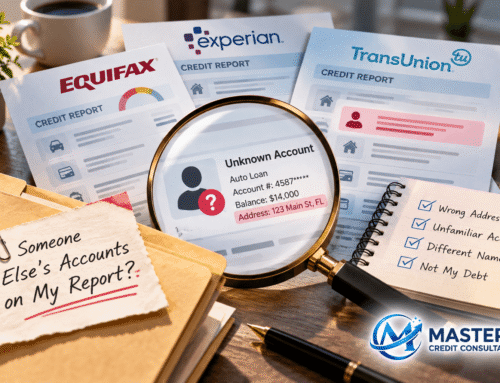
Or perhaps an account that was never yours appears on your credit report.
These errors may affect how lenders evaluate your financial history.
Under the FCRA, consumers have the right to dispute inaccurate or incomplete information with credit reporting agencies and furnishers.
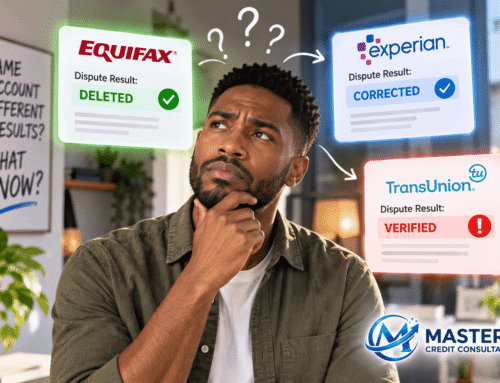
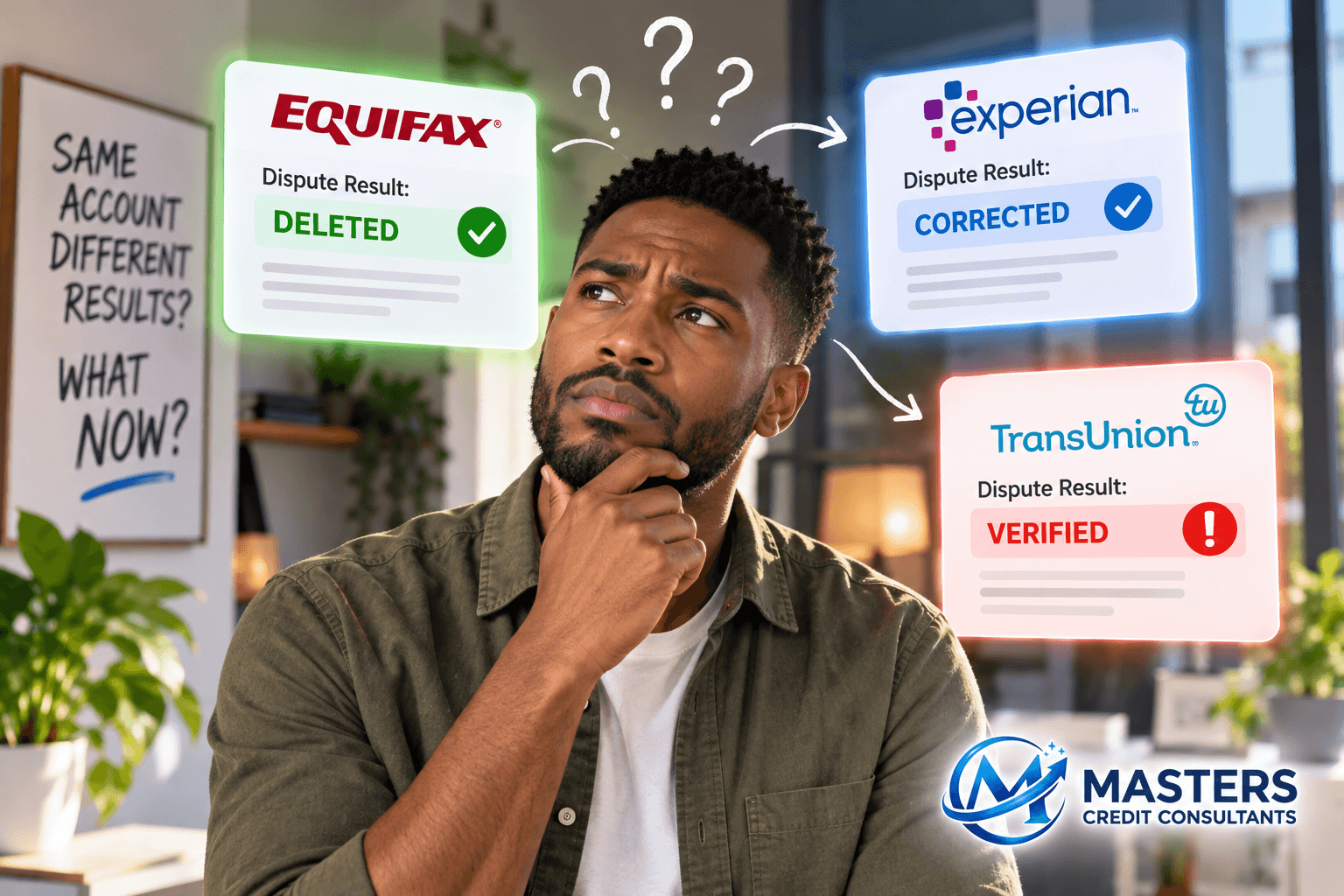
A dispute investigation may result in a correction, deletion, or verification of the reported information.
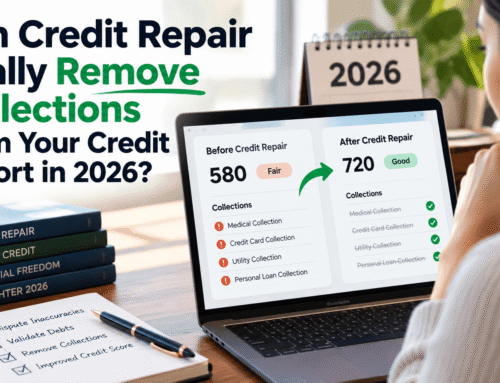
However, accurate collection accounts generally cannot be removed simply because they affect mortgage eligibility.
At Masters Credit Consultants, we help consumers understand potential reporting issues and explore appropriate steps to address inaccuracies.
Our goal is to help you approach your credit concerns with greater clarity—not promise mortgage approval or the deletion of accurate information.
Planning to Buy a Home but Concerned About Your Credit?
You don’t need to wait until a mortgage application is denied to understand what’s on your credit report.
SCHEDULE A FREE CREDIT CONSULTATION WITH MASTERS CREDIT CONSULTANTS
Can You Build Better Credit While Preparing to Buy a House?
If you’re not planning to apply for a mortgage immediately, you may have time to strengthen your overall credit profile.
Consistent on-time payments, manageable credit card balances, and responsible use of existing accounts can support your long-term credit goals.
Some consumers also explore credit-building products.
Kikoff offers products designed to help eligible consumers establish positive payment history.
Depending on the product, Kikoff may provide credit-building accounts and payment reporting features.
However, opening a new credit account shortly before applying for a mortgage may affect your credit score or create additional underwriting questions.
If you’re already working with a mortgage lender, ask before opening any new credit-building product.
Kikoff does not erase accurate collections or guarantee mortgage approval.
EXPLORE KIKOFF CREDIT-BUILDING OPTIONS
Review current product eligibility, fees, and credit reporting terms before enrolling.
The Questions Homebuyers Are Afraid to Ask
Can I buy a house with unpaid collections?
Possibly. Some mortgage programs permit unpaid collections, depending on the type of debt, underwriting requirements, and overall borrower qualifications.
Can I get an FHA loan with collections?
Yes, it may be possible. Certain collection balances may require additional debt-to-income calculations or documentation. Approval depends on the complete application and current FHA guidelines.
Do I need to pay medical collections before buying a house?
Not necessarily. Medical collections receive different treatment under several mortgage programs. Ask your lender how the applicable guidelines address your specific accounts.
Can I get a conventional mortgage with collections?
Potentially. Under certain Fannie Mae automated underwriting rules, unpaid non-mortgage collections do not have to be paid off for a one-unit primary residence. Other underwriting scenarios may have different requirements.
Will paying collections increase my mortgage credit score?
Not necessarily. Different scoring models treat paid collections differently, and a collection may remain on your report after payment.
Can I buy a house with collections and a 600 credit score?
It may be possible under certain mortgage programs, but eligibility depends on the lender, loan product, income, debts, available funds, and overall credit history.
Should I dispute collections while applying for a mortgage?
If information is inaccurate, you have the right to dispute it. However, pending disputes may create additional mortgage underwriting requirements. Coordinate with your lender before submitting or changing disputes during an active application.
How long should I wait after paying collections to apply for a mortgage?
There is no universal waiting period that applies to every mortgage program and collection account. Your lender can explain whether updated documentation or additional credit history is needed.
Can a credit repair company help me qualify for a mortgage?
A credit repair company may help you identify and address inaccurate credit reporting information. However, it cannot guarantee a particular credit score or mortgage approval. Only a mortgage lender can evaluate your loan eligibility.
Your Dream Home May Be Closer Than You Think
A collection account can feel like a major obstacle when you’re preparing to purchase a home.
But the presence of collections doesn’t tell the entire story.
Some homebuyers qualify with unpaid collections. Others need to address outstanding debt obligations or improve their financial position before applying.
And some discover that inaccurate information—not the underlying debt—is contributing to their credit concerns.
The important thing is to understand which situation applies to you.
You don’t want to spend months waiting unnecessarily, pay collections without understanding your lender’s requirements, or discover preventable reporting problems after you’ve already found a home.
The smartest first move is understanding your credit before making your next mortgage decision.
Don’t Let Credit Report Questions Delay Your Homebuying Plans
If you’re planning to buy a home but are concerned about collections, late payments, or other negative accounts, Masters Credit Consultants can help you better understand your credit reporting concerns.
Our team can assist you in reviewing potential inaccuracies and exploring responsible next steps.
Whether you’re buying your first home or preparing for another major financial milestone, understanding your credit is an important part of the journey.
Find out what may be affecting your credit before your mortgage lender does.
SCHEDULE YOUR FREE CREDIT CONSULTATION
Masters Credit Consultants — Helping You Move Toward Your Financial Goals With Confidence.
🚀 Schedule Your Free Credit Consultation with Masters Credit Consultants
Schedule a free consultation with Masters Credit Consultants and discover how a personalized credit improvement strategy can help you achieve your financial goals.
Whether you’re preparing to buy a home, qualify for better financing, rebuild after financial hardship, or strengthen your business opportunities, taking action today could open the door to greater possibilities tomorrow.
📞 Phone: 1-844-620-8796
🌐 Website: https://www.masterscredit.com
📅 Schedule Your Free Consultation:
https://www.masterscredit.com/sign-up/
Additional Helpful Links
- Check Your Credit Before Buying a Home: What to Look for First
- What Does a Credit Repair Specialist Do? What to Know Before You Sign Up
- Can Bad Credit Make It Harder to Rent an Apartment? What to Check Before You Apply
- Tired of Credit Denials? How Credit Repair Services Can Help You Review What Lenders See
Related Questions
- Can you qualify for a mortgage if you have unpaid collections on your credit report?
- Do you have to pay off collections before buying a house?
- How do collection accounts affect your credit score and mortgage approval?
- Can you get an FHA loan with collections on your credit report?
- Will paying off collections improve your chances of getting approved for a home loan?
- How long should you wait to apply for a mortgage after removing collections from your credit report?






Leave A Comment