

Why Understanding Credit Cards Matters
Credit cards are powerful tools that can either elevate your financial profile or lead to costly mistakes — depending on how well you understand them. For millions of Americans, mastering credit cards means unlocking financial flexibility, building strong credit, and accessing valuable rewards.
That’s why the “Understanding Credit Cards” YouTube video is a must-watch companion to this guide. It breaks down how credit cards work, key terms to know, and how they impact your overall credit health.
📺 Watch now:
👉 Understanding Credit Cards (YouTube)
In this comprehensive article, we’ll cover everything you need to know — while using top SEO strategies and interlinking to boost visibility on Google and other search engines.
What Is a Credit Card and How Does It Work?
A credit card allows you to borrow funds from a financial institution to make purchases, pay bills, or withdraw cash — up to a preset limit. Unlike a debit card that draws from your bank account, a credit card gives you a short-term loan you repay later.
When you pay on time and keep your balance low, your responsible behavior helps build strong credit. But if you miss payments or carry high balances, your credit score can drop quickly.
Key Benefits of Using Credit Cards Wisely
Build credit history and improve FICO scores
Earn rewards, cashback, or travel miles
Increase protection through fraud and purchase insurance
Gain access to emergency funds when needed
Watch: Understanding Credit Cards to visualize how credit cards impact your financial life.
Types of Credit Cards (and Which One Fits You Best)
1. Rewards Credit Cards
Earn points, miles, or cashback for everyday purchases. Perfect for frequent spenders who pay balances monthly.
2. Secured Credit Cards
Designed for people rebuilding credit. You provide a deposit that becomes your credit line — great for credit repair.
- Secured Cards are great ways to build your credit. Now Masters Credit Consultants offers you a secured card program from First Progress that only does 1 credit pull and reports to all 3 credit bureaus. Please follow the link below to get started: https://www.creditbuildercard.com/masterscredit.html
you can choose Open Sky secured card program to start with a higher credit limit by following the link listed below:
3. Business Credit Cards
Ideal for entrepreneurs who want to separate business and personal expenses while earning business-specific rewards.
4. Student Credit Cards
For young adults learning credit responsibility with lower limits and fewer fees.
5. Balance Transfer Cards
Useful for paying off high-interest debt by transferring balances to a card with a low or 0% introductory APR.
💡 Masters Credit Consultants Blog
“How to Build Credit Fast: Proven Strategies to Boost Your Credit Score Quickly”
“Why Are Credit Card Interest Rates Increasing? Understanding the Factors and How You Can Navigate Rising Rates”
Understanding Key Credit Card Terms
Annual Percentage Rate (APR)
The interest rate charged on unpaid balances. Lower APR = cheaper borrowing.
Grace Period
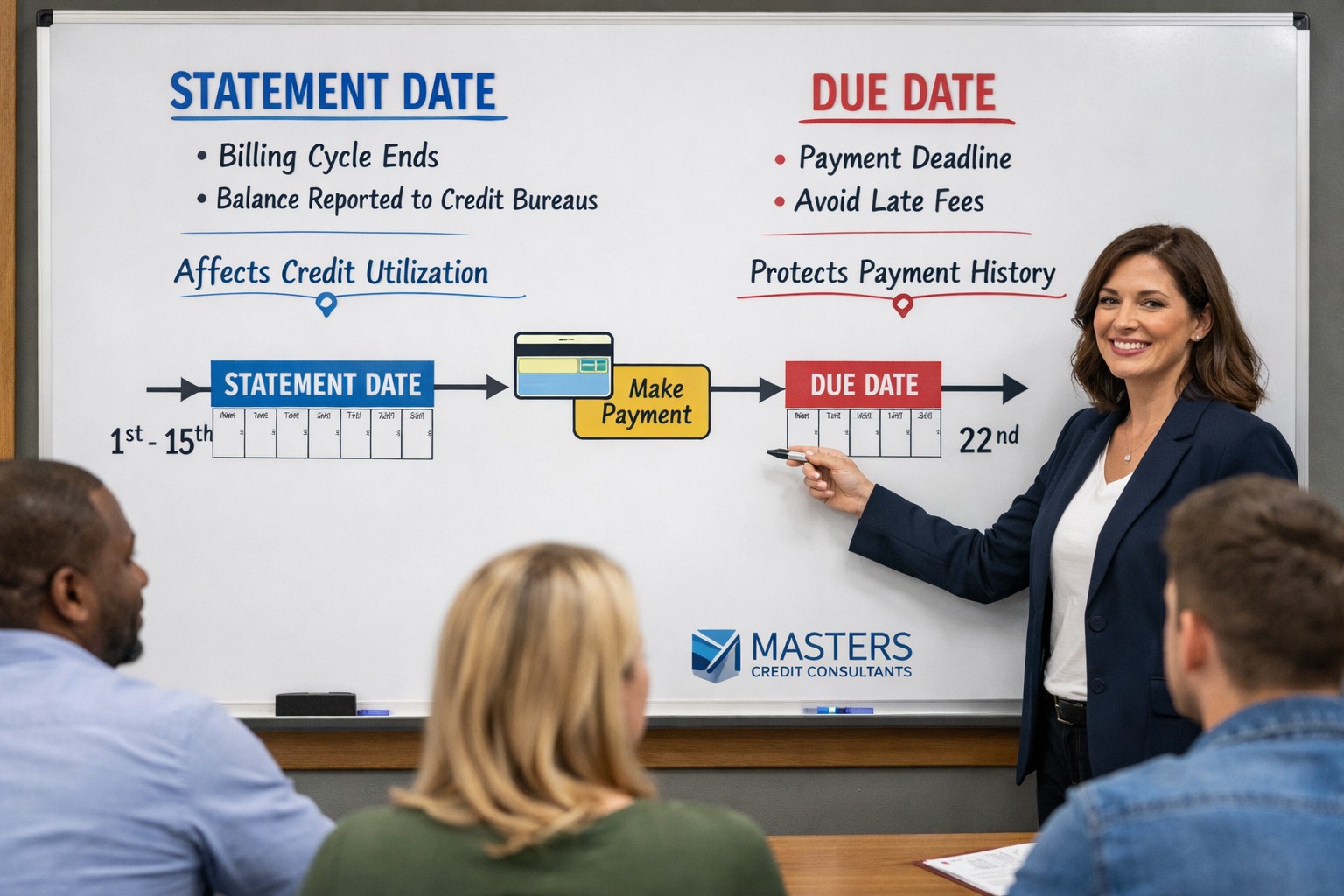
The time (usually 21–25 days) after your billing cycle to pay without interest.
Credit Limit
Your spending cap set by the issuer. Keeping utilization under 30% improves your credit score.
Minimum Payment
The smallest amount due each month. Paying only this extends debt and increases interest costs.
Balance Transfer Fee
A fee (typically 3–5%) for transferring debt from one card to another.
Cash Advance
Using your card to get cash — but at higher interest and no grace period.
How Credit Cards Affect Your Credit Score
Credit scoring models like FICO and VantageScore weigh your card behavior heavily:
| Factor | Description | Weight |
|---|---|---|
| Payment History | On-time payments build positive credit | 35% |
| Credit Utilization | Amount used vs. total limit | 30% |
| Length of Credit History | Older accounts = stronger score | 15% |
| Credit Mix | Variety of credit types | 10% |
| New Credit / Inquiries | Too many new accounts can hurt | 10% |
Using cards responsibly — paying on time and maintaining low balances — boosts your credit profile significantly.
Smart Strategies for Using Credit Cards Responsibly
Pay in full each month to avoid interest.
Automate payments to prevent missed due dates.
Keep utilization under 10–30% of your total limit.
Avoid cash advances unless absolutely necessary.
Review statements monthly for errors or fraud.
Don’t close old accounts — they improve credit age.
Common Mistakes to Avoid
Paying late or missing payments
Using over 50% of your credit limit
Opening multiple cards too quickly
Ignoring annual fees or penalty APRs
Canceling your oldest accounts
Avoiding these mistakes will strengthen your financial reputation and credit health.
Watch & Learn: Understanding Credit Cards Video
To reinforce your learning, watch the Understanding Credit Cards video on YouTube.
It provides a visual breakdown of how interest, credit limits, and payments work.
🎥 Watch now:
👉 Understanding Credit Cards (YouTube)
How Masters Credit Consultants Can Help You
If you’re struggling with credit card debt or negative marks, you don’t have to face it alone.
Masters Credit Consultants is a top-rated credit repair company that specializes in helping clients restore, rebuild, and protect their credit.
Why Choose Masters Credit Consultants
Over a decade of expertise in credit repair & education
Tailored credit analysis and dispute management
Personalized action plans for lasting financial health
5-star rated by clients across South Carolina and beyond
Contact Masters Credit Consultants Today:
📞 Phone: 1-844-620-8796
🌐 Website: www.masterscredit.com
Schedule Your Free Credit Consultation
Take the first step toward better credit today.
💬 Schedule Your Free Credit Consultation with Masters Credit Consultants:
👉 Book Your Appointment
No obligation. No hidden fees. Just professional credit help you can trust.
Frequently Asked Questions (FAQ)
1. What’s the difference between a credit card and a debit card?
A credit card lets you borrow money from a lender up to a limit, while a debit card uses your bank funds directly.
2. Does applying for a credit card hurt my credit score?
Yes, temporarily — because of a “hard inquiry.” However, responsible use improves your score long-term.
3. How many credit cards should I have?
There’s no perfect number, but 2–4 well-managed cards are enough for most people to build healthy credit.
4. Can I repair my credit after late payments?
Absolutely. With guidance from Masters Credit Consultants, you can dispute inaccuracies, rebuild credit lines, and restore your profile.
5. What’s the best way to build credit fast?
Pay on time, keep balances low, and consider secured cards or credit-builder loans.
👉 Learn how to build credit fast.
Conclusion
Understanding how credit cards work is one of the most powerful steps you can take toward financial success. With the right strategy — and help from trusted experts — you can use credit cards to build, not break, your credit.
👉 Watch the full video: Understanding Credit Cards on YouTube
📞 Contact Masters Credit Consultants at 1-844-620-8796
🌐 Visit www.masterscredit.com
📅 Schedule Your Free Consultation: Book Now







Leave A Comment