
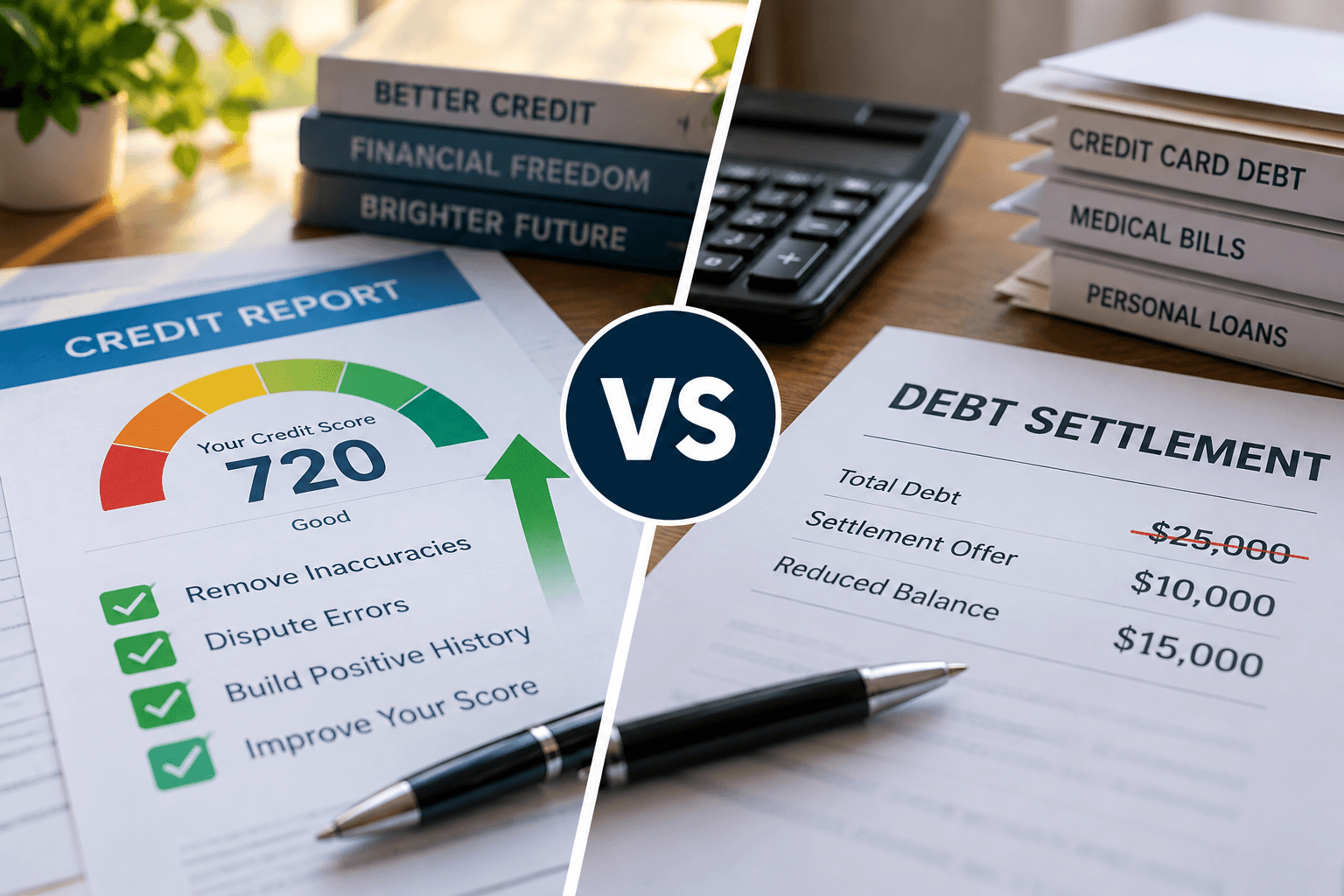

Credit Repair vs. Debt Settlement: What’s the Difference?
You can owe less money and still have damaged credit. You can also improve your credit report without reducing a single dollar of debt.
That’s the distinction many consumers overlook when comparing credit repair vs. debt settlement.
Imagine you have $12,000 in credit card debt, several missed payments, and a collection account that’s preventing you from qualifying for a new loan. You see one company advertising credit repair and another promising to negotiate your debts.
Both sound like solutions to the same financial problem. But they do very different things.
Credit repair focuses on addressing inaccurate or otherwise legally disputable information on your credit reports. Debt settlement focuses on negotiating with creditors to accept less than the full amount owed.
Neither automatically accomplishes the other’s purpose.
Before spending money on either service, you need to understand what you’re actually trying to fix: the information on your credit report, the amount of debt you owe, or both.
This guide from Masters Credit Consultants explains the differences, potential costs, risks, and alternatives so you can make a more informed decision in 2026.

Credit Repair vs. Debt Settlement: The Key Differences
Although both services are marketed to consumers experiencing financial difficulties, their objectives are fundamentally different.
| Feature | Credit Repair | Debt Settlement |
| Primary purpose | Address inaccurate or legally disputable credit reporting | Negotiate a reduction in debt owed |
| Main focus | Credit report information | Outstanding debt balances |
| Removes debt? | No | May reduce debt if creditors agree |
| Removes negative credit entries? | May correct or remove qualifying errors | Not automatically |
| Credit score impact | May improve if harmful errors are corrected | Can damage credit, especially if payments stop |
| Creditor negotiation | Not necessarily part of the service | Central part of the process |
| Main risk | Paying for ineffective or improper disputes | Additional fees, lawsuits, credit damage, and possible tax consequences |
| Best suited for | Consumers with potentially inaccurate credit reporting | Consumers with serious unsecured debt problems who understand the risks |
The Consumer Financial Protection Bureau (CFPB) warns that consumers should carefully evaluate both services, including whether they can accomplish the same tasks themselves at no cost.
What Does Credit Repair Actually Do?
Credit repair deals with the accuracy and completeness of information reported to credit bureaus.
Your credit reports contain information about your borrowing history, including credit cards, loans, payment history, collections, and other account details.
Sometimes, that information is incorrect.
An account may belong to someone else. A creditor may report an inaccurate balance. A payment may be incorrectly marked late, or an outdated collection may continue appearing after the permitted reporting period.
Under the Fair Credit Reporting Act (FCRA), consumers have the right to dispute inaccurate or incomplete credit reporting information.
Credit repair assistance may involve reviewing reports, identifying potential errors, organizing documentation, and helping consumers navigate the dispute process.
An Example of When Credit Repair Makes Sense
Consider a consumer named Daniel.
Daniel paid off an auto loan, but one credit bureau still reports an outstanding balance. Another report incorrectly shows a 60-day late payment, even though his bank records indicate the payment was made on time.
Daniel doesn’t need a debt settlement company to negotiate the auto loan. His concern is the accuracy of the information being reported.
He may benefit from disputing those specific errors, either independently or with professional assistance.
If the investigation confirms the inaccuracies, the information must be corrected or deleted as appropriate.
However, credit repair cannot legally guarantee the removal of accurate negative information simply because it affects someone’s credit score.
The distinction matters: Credit repair addresses reporting issues. It does not erase legitimate financial obligations.
What Happens During Debt Settlement?
Debt settlement is a negotiation process in which a creditor agrees to accept less than the full amount owed to resolve a debt.
For example, suppose you owe $10,000 on an unsecured credit card account.
A creditor might agree to accept $6,000 as a settlement, meaning $4,000 of the original balance would be forgiven.
That sounds attractive, but several important details are missing from the headline savings.
First, the creditor is not required to accept the offer.
Second, a debt settlement company may charge fees.
Third, the creditor may report the account as settled for less than the full balance.
Finally, depending on the circumstances, forgiven debt may create a tax obligation.
Why Debt Settlement Can Be Risky
Some debt settlement companies encourage consumers to stop making payments while accumulating funds for future negotiations.
During that period, late fees and interest may continue accumulating, accounts may become delinquent, and creditors may pursue collection activity or lawsuits.
A settlement is never guaranteed.
According to the CFPB, consumers should consider these risks carefully before entering a debt settlement program.
This doesn’t mean every negotiated settlement is inappropriate. For someone facing significant financial hardship, negotiating a debt may be worth exploring.
But reducing a balance is not the same as repairing credit.
A $15,000 Debt Example: Two Different Financial Outcomes
To understand the distinction, consider two hypothetical consumers.
Both have $15,000 in credit card debt, but their circumstances are different.
Scenario A: The Debt Is Valid, but the Credit Report Contains Errors
Maria has $15,000 in credit card balances. She makes her payments, but her credit report contains an incorrectly reported delinquency and an account that doesn’t belong to her.
Her main problem is inaccurate credit reporting.
Disputing those errors may be appropriate. Debt settlement would not address the underlying reporting mistakes and could introduce unnecessary financial risks.
Scenario B: The Debt Is Accurate, but Repayment Is No Longer Affordable
James owes $15,000, has experienced a significant income reduction, and cannot afford his current payments.
His credit reports accurately reflect his accounts and payment history.
Credit repair cannot reduce the amount James owes.
He may need to explore creditor hardship programs, nonprofit credit counseling, debt management plans, or other debt relief options. Depending on his financial circumstances, settlement or legal advice about bankruptcy may also be relevant.
The difference isn’t which consumer has the worse credit score.
It’s which problem needs to be solved first.
Does Debt Settlement Improve Your Credit Score?
Not necessarily. In some situations, debt settlement can make your credit situation worse before it improves.
When an account is settled for less than the full amount, the creditor may report that status to the credit bureaus.
If you missed payments leading up to the settlement, those delinquencies may also remain on your credit reports.
A settled account is generally different from an account paid in full as originally agreed.
Credit scoring models and lenders may evaluate those statuses differently.
However, resolving an outstanding balance may still provide financial benefits, particularly when it reduces debt that a consumer cannot realistically repay.
Can You Remove a Settled Account From Your Credit Report?
Settlement does not automatically require a creditor or credit bureau to delete accurate negative information.
If the reported balance, settlement status, or other details are inaccurate, those specific errors may be disputed.
For example, if a creditor agrees to a settlement that fully resolves the account but continues reporting an incorrect outstanding balance, that discrepancy may warrant investigation.
The important question is whether the reporting is accurate—not whether the account has been settled.
Can You Use Credit Repair and Debt Settlement Together?
Yes, but using both services does not necessarily mean you need to hire two companies.
A consumer may have legitimate debt obligations and separate credit reporting errors at the same time.
For example, someone might negotiate repayment terms on a delinquent credit card while disputing an unrelated collection account that belongs to another person.
These are separate financial issues requiring different approaches.
If you are considering debt settlement, understand the potential effect on your credit before making changes to your payments.
If you are considering credit repair, focus on whether the information being reported is inaccurate, incomplete, outdated, or otherwise subject to correction.
Neither process guarantees a higher credit score.
Which Option Is Better for Your Situation?
Instead of asking which service is better overall, consider what you want to accomplish.
If You’re Planning to Buy a Home
Start by examining your credit reports, outstanding balances, and payment history.
Inaccurate credit reporting may warrant disputes. High debt balances may require a repayment strategy.
If your accounts are accurate but your debt-to-income ratio is too high, credit repair alone won’t solve the affordability issue.
A mortgage lender can help explain the underwriting requirements relevant to your application.
If You’re Dealing With Collection Accounts
Determine whether the debt is valid, who owns it, how much is owed, and whether the reporting is accurate.
An inaccurate collection may be disputed.
A valid collection may require a different approach, such as discussing repayment or settlement options.
Read our related guide, Can Credit Repair Really Remove Collections From Your Credit Report in 2026?, for a closer look at collection reporting.
If You Have Several Late Payments
Review whether the reported delinquency dates are correct.
Accurate late payments generally cannot be removed through ordinary disputes, but you can take steps to prevent further delinquencies and establish a stronger payment history.
Our article, How to Fix Late Payments on Your Credit Report in 2026, explores these options in greater detail.
If You Cannot Afford Your Monthly Payments
Consider contacting your creditors about hardship assistance before allowing additional payments to become delinquent.
A reputable nonprofit credit counseling organization may also help you evaluate your budget and determine whether a debt management plan is appropriate.
Credit repair does not substitute for an affordable repayment strategy.
Before Paying Either Company, Ask These Five Questions
A responsible financial decision begins with understanding exactly what you’re purchasing.
- What specific problem will the service address?
Ask whether the company is reviewing reporting inaccuracies, negotiating debt balances, or providing another service.
- What results are realistically possible?
Be cautious of promises to erase all negative credit information or eliminate debt for a guaranteed percentage of what you owe.
- What will the service cost?
Request a clear explanation of fees and payment terms.
Federal laws impose restrictions on advance fees for credit repair services, and the FTC’s Telemarketing Sales Rule imposes additional requirements on covered debt relief services.
- What happens if the service is unsuccessful?
Ask what work will be performed, what happens if creditors refuse settlement offers, and whether you could face additional charges or collection activity.
- Can I accomplish this myself?
Consumers can dispute inaccurate credit reporting information directly with credit bureaus for free.
Consumers can also contact creditors directly to discuss payment arrangements or potential settlements.
Professional assistance should offer meaningful guidance and support—not promises of outcomes that cannot legally be guaranteed.
Why Reviewing Your Credit Reports Comes Before Choosing a Service
A consumer may believe they need debt settlement when the real concern is inaccurate account reporting.
Another person may assume credit repair will solve their financial problems when the underlying issue is unaffordable debt.
That’s why reviewing your credit information is an important starting point.
Compare your reports from all three nationwide credit bureaus and identify differences in balances, payment statuses, collection accounts, and other account information.
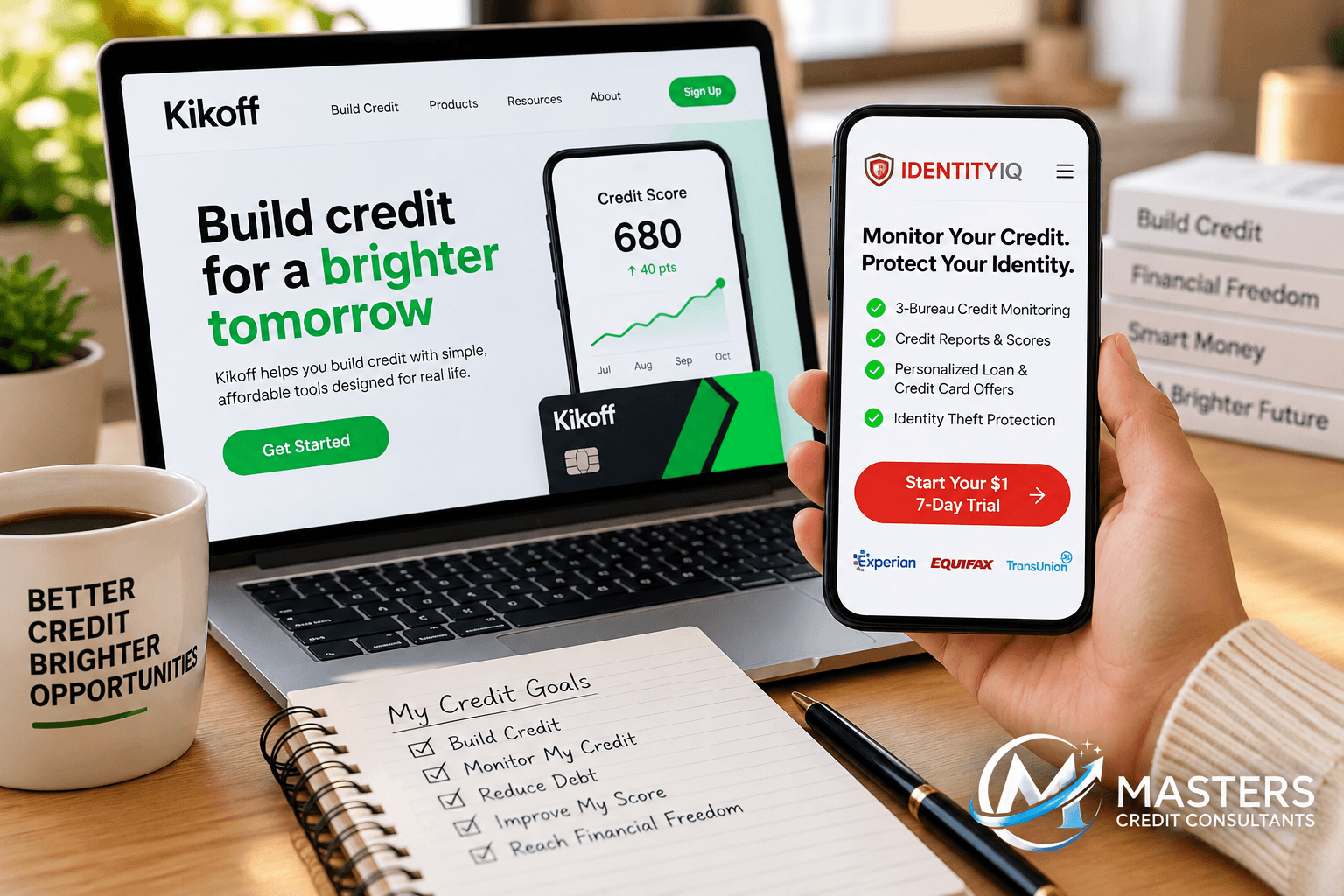
Masters Credit Consultants recommends obtaining a copy of your 3-bureau credit report through IdentityIQ’s $1 7-Day Trial, which provides access to your credit reports, scores, monitoring alerts, and identity theft protection.
Experian, Equifax, and TransUnion reports and scores can be refreshed every 30 days under eligible IdentityIQ plans.
Access Your 3-Bureau Credit Information Through IdentityIQ
The trial may renew into a paid subscription. Check current pricing, renewal conditions, and cancellation terms before enrolling.
You can also obtain free credit reports through AnnualCreditReport.com.
What About Building Credit While Paying Down Debt?
Addressing existing debt is an important step toward financial stability, but building positive credit history is equally important for your long-term financial goals.
Even while working to resolve outstanding debts or correct credit reporting errors, consumers may explore credit-building tools such as Kikoff and secured credit cards.
Kikoff: Build Positive Payment History
Kikoff offers credit-building products designed to help eligible consumers establish positive payment history.
Depending on the product, Kikoff may provide credit-building accounts and payment reporting features that support responsible credit management.
Explore Kikoff Credit-Building Options
Secured Credit Cards: Another Way to Rebuild Credit
Secured credit cards can be another option for consumers looking to establish or rebuild their credit history.
Unlike traditional unsecured credit cards, secured cards generally require a refundable security deposit, which often determines the available credit limit.
For example, a $300 deposit may provide a $300 credit limit, depending on the card issuer.
When the issuer reports account activity to the major credit bureaus, making on-time payments and maintaining low balances may help establish a positive credit history over time.
When comparing secured credit cards, look for reasonable fees, reporting to Experian, Equifax, and TransUnion, and opportunities to upgrade to an unsecured card.
How These Tools Fit Into Your Credit Improvement Strategy
Kikoff and secured credit cards serve a different purpose from debt settlement or credit repair.
They do not negotiate existing debt balances, erase accurately reported late payments, or guarantee credit score improvements.
However, responsible use of suitable credit-building products may complement a broader financial improvement strategy by helping consumers establish positive payment habits.
The goal isn’t simply to address past credit problems. It’s to build healthier credit habits that support future financial opportunities.
Before applying, review current eligibility requirements, fees, interest rates, credit reporting practices, and product terms. Opening new credit accounts may not be appropriate for every financial situation.
Frequently Asked Questions About Credit Repair vs. Debt Settlement
Is credit repair the same as debt settlement?
No. Credit repair focuses on correcting inaccurate or otherwise legally disputable credit reporting information. Debt settlement involves negotiating with creditors to accept less than the full amount owed.
Which is better for improving my credit score?
There is no universal answer. Correcting inaccurate negative information may improve your credit score. Debt settlement may resolve financial obligations but can negatively affect your credit, especially when missed payments occur during the process.
Does credit repair reduce the amount of debt I owe?
No. Correcting or deleting information from a credit report does not automatically eliminate a valid debt.
Can debt settlement remove collections from my credit report?
Not automatically. Settled collection accounts may remain on your report for the applicable reporting period. Inaccurate reporting may be disputed.
Is debt settlement better than bankruptcy?
That depends on your income, assets, debt obligations, and legal circumstances. Bankruptcy provides legal protections and remedies that debt settlement does not. A qualified bankruptcy attorney can explain the options available in your situation.
Can I repair my credit without hiring a company?
Yes. You have the right to dispute inaccurate information directly with credit reporting agencies and furnishers at no cost.
Will paying off all my debts automatically fix my credit?
No. Paying debts can improve your financial position, but accurate historical delinquencies, charge-offs, and collections may remain on your credit reports for the legally permitted period.
Can I negotiate with creditors myself?
Yes. You can contact creditors or debt collectors directly to discuss payment arrangements or possible settlements. Make sure you understand and document any agreement before making payment.
The Bottom Line: Fix the Right Problem First
Credit repair and debt settlement aren’t competing solutions to exactly the same problem.
One focuses on the information used to evaluate your creditworthiness. The other focuses on negotiating financial obligations.
If your credit report contains inaccurate information, addressing those errors may be an appropriate first step.
If your debt payments are unaffordable, you may need a repayment or debt relief strategy.
And if you’re dealing with both issues, understanding how they interact can help you avoid decisions that create additional financial difficulties.
The most effective approach begins with knowing what is accurate, what you owe, and what outcome you’re trying to achieve.
Not Sure What’s Holding Your Credit Back? Start With a Free Consultation
You don’t have to choose a financial service based on advertisements or assumptions.
At Masters Credit Consultants, we help consumers better understand their credit reports, identify potential reporting inaccuracies, and explore responsible steps toward stronger credit.
Whether you’re concerned about collections, late payments, charge-offs, or other credit reporting issues, understanding your current credit profile can help you decide what to do next.
Ready to understand your credit and explore your options?
SCHEDULE YOUR FREE CREDIT CONSULTATION
Masters Credit Consultants — Helping You Make More Informed Decisions About Your Credit.
🚀 Schedule Your Free Credit Consultation with Masters Credit Consultants
Schedule a free consultation with Masters Credit Consultants and discover how a personalized credit improvement strategy can help you achieve your financial goals.
Whether you’re preparing to buy a home, qualify for better financing, rebuild after financial hardship, or strengthen your business opportunities, taking action today could open the door to greater possibilities tomorrow.
📞 Phone: 1-844-620-8796
🌐 Website: https://www.masterscredit.com
📅 Schedule Your Free Consultation:
https://www.masterscredit.com/sign-up/
Additional Helpful Links
- Check Your Credit Before Buying a Home: What to Look for First
- What Does a Credit Repair Specialist Do? What to Know Before You Sign Up
- Can Bad Credit Make It Harder to Rent an Apartment? What to Check Before You Apply
- Tired of Credit Denials? How Credit Repair Services Can Help You Review What Lenders See
Related Questions
- Is credit repair better than debt settlement for improving your credit score?
- How does debt settlement affect your credit score compared to credit repair?
- Can you use credit repair and debt settlement services at the same time?
- Does credit repair remove debt, or does it only address inaccurate information on your credit report?
- How long does it take to see results from credit repair versus debt settlement?
- Which option should you choose if you have collections, late payments, or outstanding debts?







Leave A Comment