


Introduction: Debt Consolidation or Credit Repair — Which Is Better?
If you are asking “Should I do debt consolidation or credit repair?”, you are not alone.
This decision affects your credit score, monthly budget, and financial future.
However, choosing between debt consolidation or credit repair depends on several critical factors.
These factors include credit utilization, late payments, income stability, and how the program handles creditor payments.
Most importantly, the wrong choice can lower your credit score, not improve it.
Therefore, understanding both options clearly is essential before committing.
What Is Debt Consolidation?
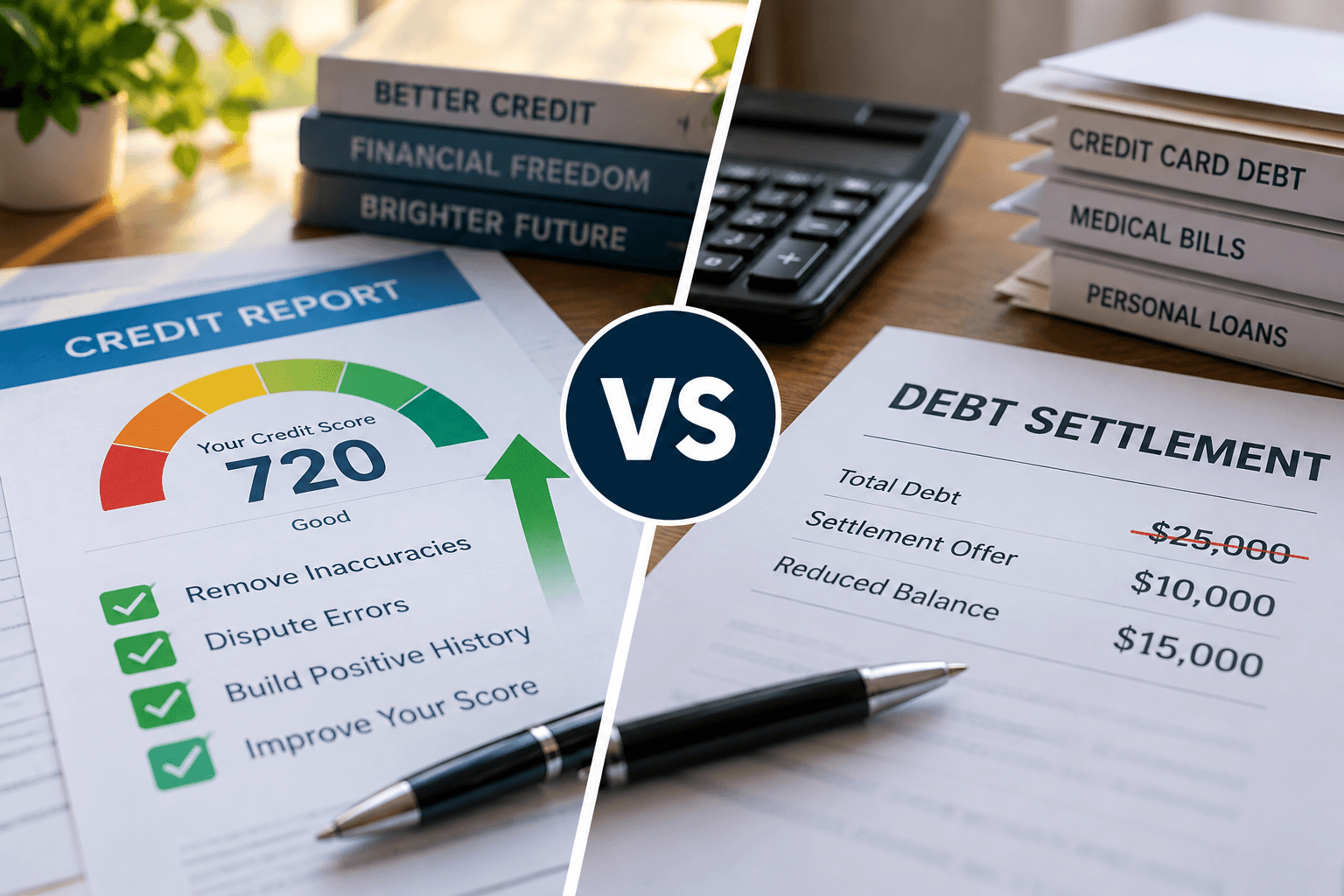
Debt consolidation combines multiple debts into one monthly payment.
This is usually done through a personal loan, settlement program, or debt management plan.
In theory, debt consolidation simplifies finances.
However, in practice, the results vary significantly.
Types of Debt Consolidation
-
Personal consolidation loans
-
Credit card balance transfers
-
Debt settlement programs
-
Debt management plans (DMPs)
Each option impacts credit very differently.
Pros and Cons of Debt Consolidation
Pros of Debt Consolidation
Debt consolidation can help in specific situations.
Pros include:
-
One monthly payment instead of many
-
Possible lower interest rate
-
Structured payoff timeline
-
Reduced mental stress from multiple bills
For consumers with high income and strong payment history, it may work.
Cons of Debt Consolidation
However, the downsides are often overlooked.
Major risks include:
-
Accounts may be required to go delinquent
-
Credit scores often drop before improving
-
Some programs do not forward payments to creditors
-
Fees can be high
-
New loans increase overall debt exposure
In many cases, damage occurs before relief is achieved.
Debt Consolidation That Requires Accounts to Go Derogatory
Some debt settlement companies intentionally stop payments.
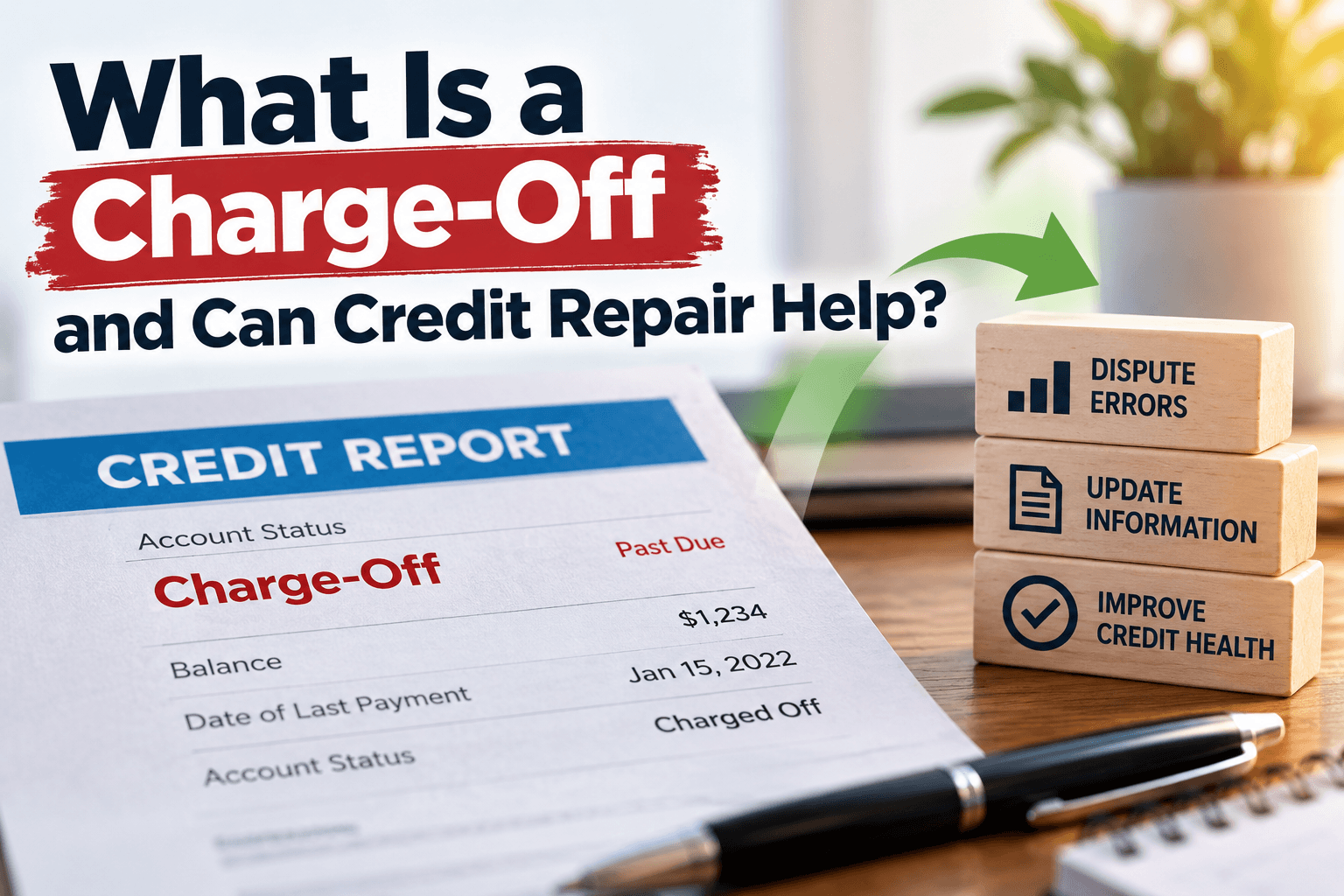
This forces accounts into collections or charge-offs.
Why This Hurts Your Credit
-
Late payments are added monthly
-
Charge-offs remain for 7 years
-
Collection accounts lower scores significantly
-
Lawsuits become more likely
Even worse, many programs hold your payments until full settlement is reached.
During this time, creditors receive nothing.
This approach often causes severe and long-lasting credit damage.
What Is Credit Repair?
Credit repair focuses on correcting, disputing, and removing inaccurate or unfair information from your credit reports.
Unlike debt consolidation, credit repair does not require missed payments.
Instead, it focuses on:
-
Fair Credit Reporting Act protections
-
Accuracy of reporting
-
Removal of unverifiable data
-
Strategic credit rebuilding

Pros and Cons of Credit Repair
Pros of Credit Repair
Credit repair protects your score while improving it.
Key benefits include:
-
No intentional missed payments
-
Improved credit utilization strategies
-
Removal of inaccurate late payments
-
Better approval odds for loans
-
Score improvement without new debt
Additionally, credit repair works well with budgeting and debt payoff plans.
Cons of Credit Repair
However, credit repair is not instant.
Considerations include:
-
Results take time
-
Requires consistency
-
Best paired with financial discipline
Despite this, it avoids the long-term harm seen in many consolidation programs.
Credit Utilization: A Major Deciding Factor
Credit utilization makes up 30% of your credit score.
Debt consolidation often increases utilization temporarily or permanently.
Credit repair, however, focuses on:
-
Reducing reported balances
-
Removing inflated balances
-
Correcting inaccurate limits
This difference alone can mean dozens or hundreds of points.
Income Matters More Than Most People Realize
If your income cannot comfortably cover payments, consolidation can fail.
Missed payments then compound damage.
Credit repair works regardless of income level.
It focuses on accuracy, compliance, and strategy, not borrowing power.
Late Payments: The Silent Credit Killer
Late payments remain for seven years.
Debt consolidation programs that pause payments add new late payments monthly.
Credit repair, on the other hand:
-
Challenges improper late reporting
-
Removes unverified delinquencies
-
Prevents new negative entries
This difference dramatically affects long-term scores.
Debt Consolidation or Credit Repair: Which Is Right for You?
Debt Consolidation May Be Better If:
-
You have strong income
-
No recent late payments
-
Low credit utilization
-
No collection accounts
Credit Repair Is Better If:
-
You already have late payments
-
Accounts are in collections
-
Utilization is high
-
You want to protect your score
-
You plan to buy a home or car
For most consumers, credit repair is the safer first step.
Why Masters Credit Consultants Is a Top Credit Repair Company
Throughout the credit repair industry, Masters Credit Consultants stands out.
They specialize in:
-
Advanced dispute strategies
-
Credit utilization optimization
-
Removal of inaccurate negative accounts
-
Personalized credit rebuilding plans
Most importantly, they focus on long-term score improvement, not quick fixes.
To monitor progress properly, always use a full three-bureau credit report.
Masters Credit Consultants recommends IdentityIQ, which provides Experian, Equifax, and TransUnion reports and scores refreshed every 30 days, daily monitoring alerts, dark web monitoring, and $1,000,000 identity theft insurance:
👉 https://www.identityiq.com/securepreferred.aspx?offercode=431295SH
Additional Information:
High-value pages on MastersCredit.com:
-
Credit Repair Services – https://www.masterscredit.com/credit-repair
-
How Credit Repair Works – https://www.masterscredit.com/how-credit-repair-works
-
Fix Late Payments on Credit Report – https://www.masterscredit.com/fix-late-payments
-
Improve Credit Utilization – https://www.masterscredit.com/credit-utilization
More info on YMAFinancial.com:
-
Personal Financial Strategy Consulting – https://www.ymafinancial.com
People Also Ask (PAA)
Does debt consolidation hurt your credit score?
Yes, especially if accounts go delinquent or new loans increase utilization.
Is credit repair better than debt settlement?
In most cases, yes, because it avoids intentional defaults.
Can credit repair remove late payments?
Yes, if they are inaccurate, unverifiable, or improperly reported.
Related Questions & Helpful Resources
-
How Long Does Credit Repair Take? – https://www.masterscredit.com/how-long-does-credit-repair-take
-
Best Way to Pay Down Debt Without Hurting Credit – https://www.masterscredit.com/debt-strategy
-
Credit Repair vs Debt Settlement Explained – https://www.masterscredit.com/credit-repair-vs-debt-settlement
Final Thoughts: Debt Consolidation or Credit Repair?
When comparing debt consolidation or credit repair, the difference is clear.
One risks short-term relief with long-term damage.
The other focuses on accuracy, protection, and sustainable improvement.
For most consumers, credit repair first is the smarter path.
Work With Masters Credit Consultants Today
If you are serious about improving your credit the right way, start here.
Masters Credit Consultants
📞 Phone: 1-844-620-8796
🌐 Website: https://www.masterscredit.com
🎯 Schedule Your Free Credit Consultation








Leave A Comment