

What Is a Charge-Off and Can Credit Repair Help?
Your credit card company says your account has been “charged off.” Does that mean you no longer owe the money?
Unfortunately, no.
A charge-off is one of the most misunderstood terms in consumer credit. It sounds like a debt has been canceled, forgiven, or removed from your financial responsibilities.
But a charge-off doesn’t mean the creditor has forgotten about the money you owe.
In fact, it can create additional challenges for your credit profile, particularly if the debt is transferred or sold to a collection agency.
If you’ve recently discovered a charged-off account on your credit report, you probably have several questions.
Can you still be sued for the debt? Should you pay it? Can the charge-off be removed? And can professional credit repair services actually help?
At Masters Credit Consultants, we believe the first step toward improving your credit is understanding what your credit report is telling you.
Let’s separate the facts from the misconceptions and explore what a charge-off really means for your financial future.

First, What Does a Charge-Off Actually Mean?
A charge-off happens when a creditor determines that a debt is unlikely to be collected and records it as a loss for accounting purposes.
For many credit card accounts, this generally occurs after approximately 180 days of delinquency, although the timing depends on the type of debt and applicable regulatory requirements.
But here’s the important distinction:
A charge-off is an accounting action taken by the creditor. It is not automatically a cancellation of your legal obligation to repay the debt.
Even after an account is charged off, the creditor may continue collection efforts, assign the account to a collection agency, or sell the debt to another company.
Depending on the debt and applicable state law, the creditor or debt buyer may also have the ability to pursue legal collection remedies.
A Realistic Example
Imagine you have a credit card with a $4,500 balance.
After losing your job, you miss several monthly payments.
The creditor sends notices, adds applicable interest and fees, and eventually determines that the account is unlikely to be repaid.
The account is charged off.
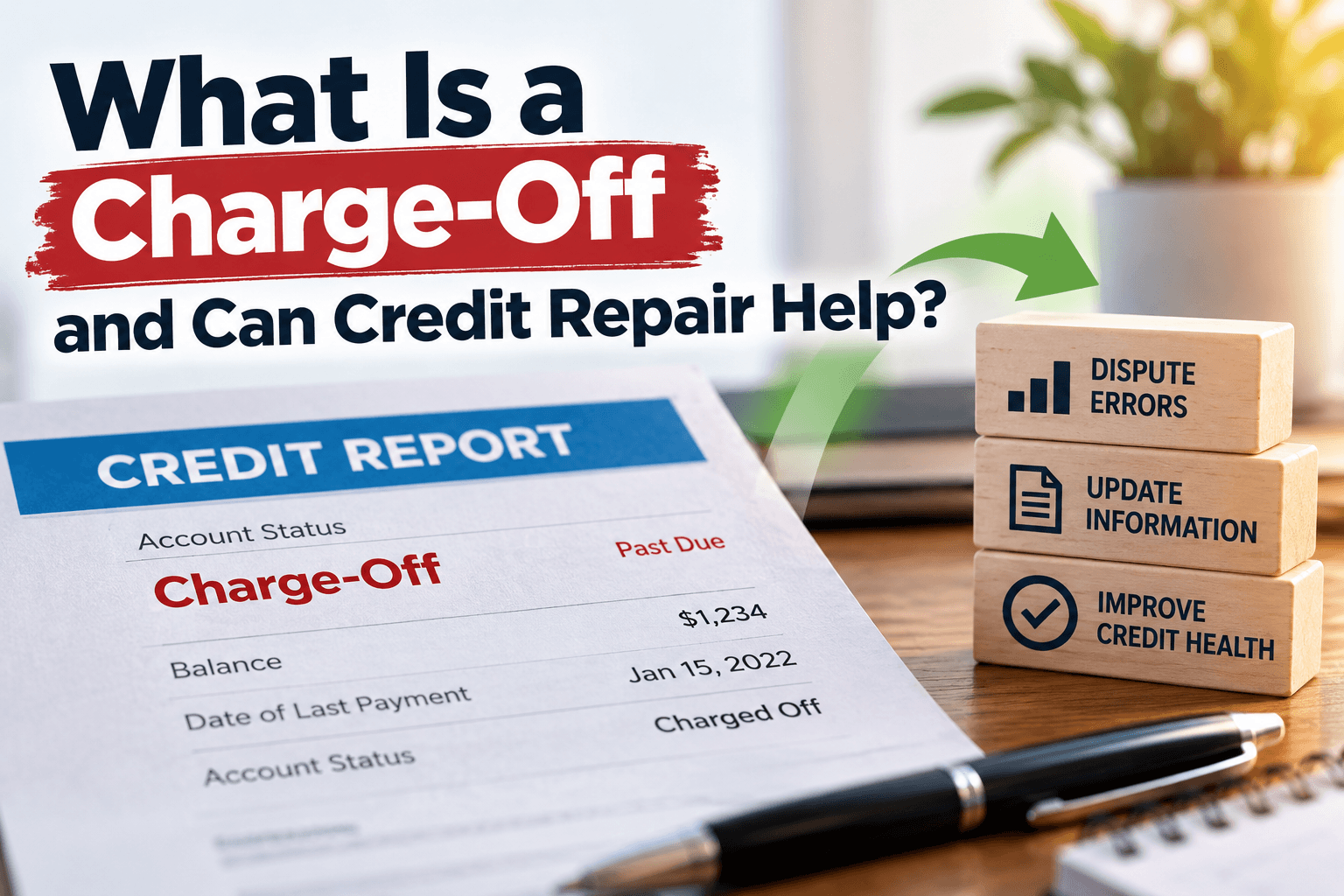
You check your credit report and see:
Account Status: Charged Off
That doesn’t necessarily mean the $4,500 balance has disappeared.
The creditor may still own the account and attempt to collect it. Alternatively, the debt may be sold to a collection agency.
The way the balance should appear on your credit report depends on who currently owns the debt and the account’s actual status.
Charge-Off vs. Collection: Are They the Same Thing?
No. A charge-off and a collection account are related, but they represent different events.
| Charge-Off | Collection Account |
|---|---|
| ● A creditor records a debt as a loss. |
● A creditor or debt collector attempts to recover an unpaid debt. |
| ● Usually follows serious delinquency. |
● May occur before or after a charge-off. |
| ● Does not automatically eliminate the debt. |
● Does not automatically mean the debt was sold. |
| ● May appear on your credit report. |
● May also appear on your credit report. |
| ● May remain for approximately seven years from the original delinquency. |
● Generally follows the same original delinquency-based reporting period. |
One unpaid debt can sometimes result in both an original creditor’s charged-off account and a separate collection account appearing on your credit report.
That does not automatically mean the debt is being reported improperly.
However, inaccurate balances, incorrect ownership information, or duplicate collection entries may warrant closer examination.
For example, if an original creditor sells a charged-off debt, the original creditor generally should not continue reporting a balance that it is still owed.
The debt buyer or collection agency may report the balance it owns or is authorized to collect.
Understanding the difference can help you identify whether the information is being reported accurately.
Five Charge-Off Myths That Could Cost You Money
Myth #1: A Charged-Off Debt No Longer Has to Be Paid
Reality: A charge-off does not automatically eliminate your debt.
The creditor may still pursue collection or sell the account.
Whether a creditor can sue to collect depends on applicable law, including the statute of limitations.
A debt can remain legally owed even when the period for filing a collection lawsuit has expired.
Myth #2: Paying a Charge-Off Automatically Removes It
Reality: Paying a charged-off account generally updates the reported balance or payment status, but the historical charge-off may remain.
For example, the account may be updated to reflect that the charged-off balance has been paid.
However, accurate negative reporting can generally remain until the applicable credit reporting period expires.
Myth #3: Every Charge-Off Can Be Removed Through Credit Repair
Reality: Legitimate credit repair services cannot guarantee the removal of accurately reported charge-offs.
However, inaccurate, incomplete, outdated, or unverifiable information may qualify for correction or deletion under the Fair Credit Reporting Act (FCRA).
Myth #4: A Charge-Off Restarts Every Time the Debt Is Sold
Reality: Selling or transferring a debt does not ordinarily restart the federal credit reporting period.
The reporting period is tied to the original delinquency that led to the charge-off.
A debt buyer cannot legally create a new reporting period simply by purchasing the account.
Myth #5: Ignoring a Charge-Off Will Make It Disappear Faster
Reality: Ignoring the account does not accelerate the credit reporting period.
It may also expose you to continued collection activity or legal action where permitted.
Before making payments or responding to an old debt, consider verifying its ownership, balance, and legal status.
How Long Does a Charge-Off Stay on Your Credit Report?
A charge-off can generally remain on your credit report for approximately seven years from the date of the original delinquency that led to the charge-off.
Under the FCRA, the reporting period for charge-offs is generally measured from the delinquency that immediately preceded the charge-off, with a statutory period of seven years plus 180 days.
Credit reporting agencies commonly remove these accounts at approximately the seven-year mark.
Example: A Charge-Off From 2021
Suppose your account first became delinquent in June 2021, and you never brought it current.
The creditor eventually charged off the account later that year.
The reporting period is generally based on the original June 2021 delinquency—not the later charge-off date.
Selling the debt in 2024 or making a payment in 2026 does not ordinarily restart the federal credit reporting period.
However, state laws concerning debt collection lawsuits may operate differently.
The statute of limitations for suing over a debt and the federal credit reporting period are separate legal concepts.
Can Credit Repair Remove a Charge-Off?
This is where understanding your legal rights becomes important.
Credit repair may help when a charge-off contains information that is inaccurate, incomplete, outdated, or otherwise subject to correction under applicable law.
Under the FCRA, consumers have the right to dispute credit reporting information they reasonably believe is inaccurate or incomplete.
Credit reporting agencies generally must investigate disputes and correct or delete information when required.
However, filing a dispute does not guarantee that an account will be removed.
When a Charge-Off May Be Disputed
Consider these situations:
The account doesn’t belong to you.
An account may appear because of identity theft, mixed credit files, or incorrect identifying information.
The balance is inaccurate.
A creditor may report an incorrect balance, or a sold account may continue displaying an amount as owed to the original creditor.
The payment history contains errors.
The creditor may report incorrect delinquency dates or payment statuses.
The account is too old to remain on your report.
A charge-off that exceeds the applicable reporting period may qualify for removal.
The account cannot be verified.
When a reasonable investigation cannot verify disputed information, the credit bureau generally must modify or delete the information as required by law.
Not every reporting error requires deletion of the entire account. Some errors can be resolved through corrections.
The goal of a legitimate dispute is accurate reporting—not the automatic removal of every negative account.
Before You Decide What to Do, Review Your Credit Information
If you discover a charge-off, avoid making assumptions based solely on the account status.
You need to understand who owns the debt, what balance is being reported, when the original delinquency occurred, and whether the information is accurate.
Start by comparing your credit reports from Experian, Equifax, and TransUnion.
Masters Credit Consultants recommends obtaining a copy of your 3-bureau credit report through IdentityIQ’s $1 7-Day Trial, which provides access to your credit reports, scores, monitoring alerts, and identity theft protection.
Under eligible IdentityIQ plans, Experian, Equifax, and TransUnion reports and scores can be refreshed every 30 days.
ACCESS YOUR 3-BUREAU CREDIT REPORTS WITH IDENTITYIQ
Review current trial pricing, automatic renewal terms, and cancellation requirements before enrolling.
You can also obtain free credit reports from AnnualCreditReport.com.
Should You Pay a Charged-Off Account?
This question doesn’t have a universal answer.
Paying a valid debt may help resolve an outstanding financial obligation and reduce certain collection risks.
However, paying a charge-off does not automatically remove the negative account history or guarantee a credit score increase.
Before making a payment, consider several important questions.
Who Currently Owns the Debt?
The original creditor may still own the account, or it may have been sold to a debt buyer.
Make sure you know which company has the legal right to collect payment.
Who Currently Owns the Debt?
The original creditor may still own the account, or it may have been sold to a debt buyer.
Make sure you know which company has the legal right to collect payment.
Is the Balance Accurate?
Review the amount being requested and ask for appropriate documentation if you believe it is incorrect.
Is the Debt Within the Statute of Limitations?
State laws determine how long a creditor or collector generally has to sue over a debt.
In some states, making a payment or acknowledging an older debt may affect that period.
If you’re unsure about the legal status of an old debt, consider consulting a qualified consumer law attorney before taking action.
Can You Negotiate a Settlement?
In some situations, a creditor or debt collector may agree to accept less than the full balance.
However, settlement does not guarantee deletion of the charge-off.
A settlement may also have tax consequences depending on the amount forgiven and your financial circumstances.
Request written confirmation of any settlement terms before making payment.
What Happens to Your Credit Score After a Charge-Off?
Charge-offs can significantly affect your credit profile because they generally follow an extended period of missed payments.
The exact effect depends on your credit history and the scoring model used.
For example, a consumer with an otherwise strong payment history may experience a different impact from someone who already has several serious delinquencies.
A charge-off may also influence how lenders evaluate applications for mortgages, auto loans, credit cards, and other financing.
Will Paying the Charge-Off Raise Your Score?
It may, but not necessarily.
Some scoring models may respond differently to a paid charge-off than an unpaid one.
Other factors, such as remaining delinquencies, credit utilization, and the age of the account, also matter.
There is no guaranteed number of points you will gain after paying or correcting a charged-off account.
Can You Rebuild Credit While a Charge-Off Remains?
Yes.
A charge-off can remain on your credit report while you develop healthier credit habits.
Making current payments on time, managing revolving balances, and avoiding unnecessary new debt may help support your credit profile over time.
Positive financial behavior does not erase an accurate charge-off, but it can help you move forward.
Could Kikoff Help You Build Positive Payment History?
If you’re working to recover from past credit challenges, you may want to explore tools designed to support consistent credit-building activity.
Kikoff offers credit-building products that may help eligible consumers establish positive payment history.
Depending on the product and eligibility, available features may include credit-building accounts and payment reporting options.
However, Kikoff does not automatically remove charge-offs, eliminate existing debts, or guarantee credit score improvements.
Credit-building tools should complement responsible financial habits rather than replace a strategy for addressing existing obligations.
EXPLORE KIKOFF CREDIT-BUILDING OPTIONS
Review current product fees, eligibility requirements, and credit reporting practices before enrolling.
When Is It Worth Getting Professional Credit Repair Assistance?
Not every charge-off requires hiring a credit repair company.
If the account is accurate and you understand your options, you may be able to address the situation independently.
But some consumers face more complicated reporting concerns.
For example, you might discover that an original creditor and debt buyer are reporting inconsistent balances.
Or perhaps an account that was sold several years ago still contains inaccurate ownership information.
You may also have several charge-offs across different credit bureaus, making it difficult to identify which details are correct.
These situations can require careful review and documentation.
At Masters Credit Consultants, we help consumers better understand their credit reports, identify potential inaccuracies, and explore appropriate dispute options.
We don’t believe in promising that every charge-off can be erased.
Instead, the focus is on understanding the facts, identifying legitimate reporting concerns, and helping consumers take informed steps toward stronger credit.
Dealing With a Charge-Off and Not Sure What to Do Next?
You don’t have to guess whether the information is accurate or whether it may qualify for correction.
SCHEDULE A FREE CREDIT CONSULTATION WITH MASTERS CREDIT CONSULTANTS
Charge-Off Questions Consumers Commonly Ask
Is a charge-off worse than a collection?
Both can negatively affect your credit. A charge-off reflects a creditor’s accounting treatment of a seriously delinquent debt, while a collection account reflects an attempt to recover unpaid debt. Their effects depend on the overall credit profile and scoring model.
Can a charge-off be removed without paying?
Potentially, if the reported information is inaccurate, incomplete, outdated, or otherwise legally required to be removed. However, deleting a credit report entry does not automatically eliminate a valid debt.
Can a charge-off be removed after two years?
An inaccurate charge-off may qualify for correction or deletion regardless of whether it is two years old. An accurate charge-off generally may remain for the applicable reporting period.
Can a charge-off turn into a collection?
Yes. After a charge-off, the creditor may assign the account to a collection agency or sell the debt to a debt buyer.
Can you be sued for a charged-off debt?
Possibly. A charge-off does not automatically prevent a creditor or debt buyer from pursuing legal collection remedies. The ability to sue depends on applicable law and the circumstances of the debt.
Does paying a charge-off restart the seven-year credit reporting period?
Generally, no. The federal reporting period is tied to the original delinquency that led to the charge-off. However, payment may affect the statute of limitations for collection lawsuits under certain state laws.
Will a paid charge-off look better to lenders?
Some lenders may view a resolved balance differently from an outstanding obligation. However, a paid charge-off may still be considered negative credit history.
Can credit repair companies guarantee charge-off removal?
No. A legitimate credit repair company cannot guarantee the removal of accurately reported negative information.
Can I dispute a charge-off myself?
Yes. Consumers have the right to dispute inaccurate or incomplete credit reporting information directly with credit bureaus and furnishers at no cost.
A Charge-Off Doesn’t Have to Define Your Financial Future
Finding a charge-off on your credit report can be discouraging, especially when you’re trying to qualify for financing or rebuild your financial stability.
But the term “charged off” doesn’t tell you everything you need to know.
The account may still be legally collectible. It may contain reporting errors. Or it may be accurate and require a different approach.
The important thing is to understand which situation applies to you before making decisions.
Don’t assume that every charge-off can be removed. But don’t assume that every detail on your credit report is necessarily correct, either.
Understanding the difference can help you make better financial decisions.
Ready to Understand What’s Holding Your Credit Back?
If you’re dealing with a charged-off account, collection, or other negative credit reporting information, Masters Credit Consultants can help you take a closer look at your credit profile.
Our team helps consumers identify potential reporting inaccuracies, understand available dispute options, and explore responsible strategies for moving forward.
Whether you’re preparing for a major purchase or simply trying to improve your credit health, a clearer understanding of your credit information is a valuable first step.
Find out what may be affecting your credit—and what you can do about it.
SCHEDULE YOUR FREE CREDIT CONSULTATION
Masters Credit Consultants — Helping You Take the Next Step Toward Better Credit.
🚀 Schedule Your Free Credit Consultation with Masters Credit Consultants
Schedule a free consultation with Masters Credit Consultants and discover how a personalized credit improvement strategy can help you achieve your financial goals.
Whether you’re preparing to buy a home, qualify for better financing, rebuild after financial hardship, or strengthen your business opportunities, taking action today could open the door to greater possibilities tomorrow.
📞 Phone: 1-844-620-8796
🌐 Website: https://www.masterscredit.com
📅 Schedule Your Free Consultation:
https://www.masterscredit.com/sign-up/
Additional Helpful Links
- Check Your Credit Before Buying a Home: What to Look for First
- What Does a Credit Repair Specialist Do? What to Know Before You Sign Up
- Can Bad Credit Make It Harder to Rent an Apartment? What to Check Before You Apply
- Tired of Credit Denials? How Credit Repair Services Can Help You Review What Lenders See
Related Questions
- Can a charge-off be removed from your credit report through credit repair?
- How long does a charge-off stay on your credit report?
- Does paying off a charged-off account improve your credit score?
- What is the difference between a charge-off and a collection account?
- Can you dispute a charge-off if the information on your credit report is inaccurate?
- Can you qualify for a mortgage, car loan, or credit card with a charge-off on your credit report?









Leave A Comment