


Your Credit Report Says You’re Deceased—But You’re Alive. What Now?
If your credit report says deceased even though you are alive, you may be dealing with an incorrect deceased indicator caused by a creditor, credit bureau, or Social Security record error. The good news is that you can challenge the mistake, identify where it originated, and request a correction before it continues affecting your financial opportunities.
Professional credit repair services may also help you understand your options if the error remains unresolved.
In This Article You’ll Learn
- How to determine why your credit report incorrectly identifies you as deceased.
- The exact steps to dispute the error and restore accurate credit reporting.
- How to protect your credit and financial opportunities while the mistake is being corrected.
Table of Contents
- Can a Credit Report Really Say You’re Dead?
- Why Does Your Credit Report Say Deceased?
- Two Types of Deceased Errors You Need to Know
- How to Fix a Credit Report That Says You’re Deceased
- What to Say When Disputing a Deceased Credit Report
- How Long Does It Take to Remove a Deceased Indicator?
- What If the Credit Bureau Refuses to Fix the Error?
- Can Being Reported Deceased Affect Your Business or Loan Application?
- How to Protect Your Credit After the Correction
- Frequently Asked Questions
- Your Financial Story Isn’t Over
Can a Credit Report Really Say You’re Dead?
Imagine applying for a mortgage, car loan, or business credit card.
You’ve gathered your financial documents, checked your budget, and prepared everything the lender requested.
Then you receive an unexpected response.
Your application cannot proceed because your credit file indicates that you’re deceased.
Yes, apparently you’ve passed away without knowing it.
It sounds like an administrative nightmare from a comedy movie, but incorrect deceased indicators are a real credit reporting problem.
Being mistakenly marked deceased does not mean your Social Security number is automatically canceled or that your financial accounts are legally closed. However, the error can make it difficult for lenders to verify your credit history.
A deceased indicator may appear on a particular credit account or affect your entire credit file, depending on where the information came from.
This distinction matters because the solution is not always as simple as submitting a standard credit dispute.
You do not have to accept inaccurate deceased information on your credit report. You have the right to dispute it and request an investigation.
Why Does Your Credit Report Say Deceased?
Credit bureaus collect information from banks, lenders, collection agencies, and other reporting sources.
Although these systems are designed to maintain accurate financial records, mistakes can happen.
Here are four possible reasons your credit report may incorrectly show that you have died.
- A creditor accidentally reported you as deceased
A bank or lender may submit incorrect account information.
For example, a creditor could mistakenly add a deceased notation to your account when updating its internal records.
The credit bureau may then display that notation even though the information is wrong.
- Your information was confused with someone else’s
People with similar names or identifying information can sometimes experience reporting errors.
Imagine two individuals named Robert James Wilson.
One person passes away, but an incorrect account association causes the deceased notation to appear on the other person’s financial record.
This type of confusion may involve a broader account-matching problem.
If you notice unfamiliar accounts or personal information alongside the deceased indicator, our guide to mixed credit files and someone else’s accounts appearing on your credit report explains how these errors can happen.
- Social Security records contain incorrect information
A more serious possibility is that the Social Security Administration (SSA) has incorrectly recorded your death.
If a deceased status connected to your Social Security number is being used by a credit bureau, the problem may extend beyond a single credit account.
Correcting the underlying government record may be necessary before the bureau can fully resolve the problem.
- Outdated or incorrect information remains in a reporting system
A creditor may have corrected a mistake internally, but the updated information might not yet appear on every affected credit report.
Alternatively, a previous correction may not have addressed all the sources reporting the deceased status.
Before assuming identity theft or applying for new credit, identify which organization is responsible for the incorrect deceased information.
That single step can save considerable time.
Two Types of Deceased Errors You Need to Know
Here is where many people make a costly mistake.
They discover a deceased notation and immediately send the same dispute to every credit bureau without checking what the notation actually means.
But there are two different situations.
| Type of Error | What It Means | Where to Start |
|---|---|---|
Account-Level Deceased Notation |
One lender or creditor has identified you as deceased on a specific account. | Recommended First Step:
Dispute the affected account with the credit bureau and the creditor.
|
Credit-File-Level Deceased Indicator |
Your broader credit file may be flagged because of information connected to your Social Security number. | Recommended First Step:
Determine whether SSA records contain an error and correct the underlying information.
|
For example, imagine that your Experian credit report contains five accounts.
Four accounts appear normal, but one credit card account includes a deceased notation.
That suggests an issue related to the individual creditor’s reporting.
Now imagine that the credit bureau cannot generate your normal credit report because your Social Security number has been identified as belonging to someone deceased.
That may indicate a broader problem requiring additional identity verification or correction of government records.
The two situations may look similar to consumers, but they can require different corrective actions.
Before you dispute anything, ask: “Is the deceased status attached to one account, or is it affecting my entire credit file?”
That question should guide your next steps.
How to Fix a Credit Report That Says You’re Deceased
You can approach the correction process systematically without immediately paying a company or hiring an attorney.
Here is a practical recovery plan.
Step 1: Obtain your credit reports and identify the error
Start by reviewing your credit information from Experian, Equifax, and TransUnion.
You want to determine whether the deceased notation appears on one report, several reports, or only a particular account.
For consumers who prefer monitoring and credit report access in one service, IdentityIQ offers a $1 seven-day trial.
Depending on the selected plan and applicable terms, the advertised features include:
- Experian, Equifax, and TransUnion reports and scores, with refreshes available every 30 days under the stated offer.
- Three-bureau daily credit monitoring and alerts.
- Dark web monitoring.
- Up to $1,000,000 in identity theft insurance, subject to policy terms, exclusions, and limits.
You can also request free credit reports through the federally authorized credit report service without purchasing monitoring.
If the deceased indicator prevents you from accessing your credit report online, contact the credit bureau directly and ask about alternative identity verification procedures.
When reviewing your credit information, look for:
- Accounts labeled deceased.
- Unfamiliar names or addresses.
- Accounts that appear incorrectly closed.
- Unexpected differences between the three bureaus.
- Missing accounts or incomplete credit histories.
Save copies of any reports you can access.
Step 2: Contact the credit bureau reporting the mistake
If one or more credit bureaus display the deceased status, notify each affected bureau.
Explain that you are alive and that the deceased notation is inaccurate.
Identify the affected account or report information as specifically as possible.
Ask whether the error comes from a creditor’s account information or a broader deceased indicator associated with your identity.
That distinction can help you determine whether additional action is required.
Step 3: Contact the creditor if an individual account is affected
If the deceased notation appears on a particular credit account, contact the bank, lender, or other company furnishing that information.
Ask the company to investigate its records and correct the inaccurate status.
For example:
“My credit report identifies me as deceased on an account your company reports. I am alive, and this status is incorrect. Please investigate the account and correct any inaccurate information provided to the credit bureaus.”
Request written confirmation of the investigation and retain copies of your communications.
Step 4: Contact Social Security if its records are incorrect
If the Social Security Administration has mistakenly recorded your death, visit your local Social Security office as soon as possible.
SSA requires appropriate identity documentation to investigate and correct an erroneous death record.
Bring current original identification or certified documents accepted by the agency.
Once the record has been corrected, request the written notice SSA offers to confirm that the death report was erroneous.
This documentation may help you resolve related problems with credit bureaus, banks, or other organizations.
Step 5: Submit a written dispute with supporting evidence
Your dispute should explain precisely what is inaccurate and request an investigation.
Depending on the circumstances, useful documents may include:
- A copy of your government-issued identification.
- Proof of your current mailing address.
- The affected credit report or account details.
- Relevant correspondence from the creditor.
- An SSA correction notice, if applicable.
Follow the bureau’s submission instructions and provide copies of supporting documents rather than original records.
Do not email sensitive identity documents to unverified addresses or include your complete Social Security number in ordinary email correspondence.
Step 6: Confirm the correction instead of assuming the problem is resolved
A letter saying that an investigation is complete does not necessarily mean every affected record is accurate.
Review the updated information.
Check whether the deceased notation has been removed and whether your legitimate accounts are reported correctly.
If more than one bureau displayed the error, verify each affected report separately.
Your goal isn’t simply to make the word “deceased” disappear. It’s to restore an accurate credit history that lenders can properly evaluate.
What to Say When Disputing a Deceased Credit Report
A well-written dispute does not need complicated legal language.
It needs to identify the error, explain why it is inaccurate, and clearly request the appropriate correction.
Here is an example you can adapt.
Sample Deceased Credit Report Dispute Letter
To: Credit Reporting Agency
Subject: Formal Dispute of Incorrect Deceased Status
Dear Credit Reporting Department,
I am writing to dispute inaccurate information on my credit report indicating that I am deceased.
I am alive, and the deceased status associated with my credit file or account is incorrect.
The affected information is as follows:
Name: [Your Full Name]
Report or Account Reference: [Relevant Reference Number]
Incorrect Information: Deceased Status
I request that you investigate this error, identify the source of the inaccurate information, and correct or remove the deceased notation as appropriate.
I have included copies of relevant identification and supporting documentation.
Please provide written confirmation of your investigation results and any corrections made to my credit information.
Sincerely,
[Your Full Name]
[Your Mailing Address]
[Date]
This template is a starting point, not a substitute for describing your particular circumstances.
If you already have documentation proving that an SSA record was corrected, mention that information and include the appropriate supporting copy.
Ask the bureau to investigate the source of the deceased notation, not merely to remove a status label without determining why it appeared.
Otherwise, the underlying reporting problem may remain.
How Long Does It Take to Remove a Deceased Indicator?
Credit bureaus generally must complete investigations of credit report disputes within 30 days.
Certain situations allow additional time, including some investigations that can extend to 45 days.
However, the complete correction process may take longer if multiple organizations are involved.
Consider these two examples.
Situation A: One creditor reported the wrong status
The creditor investigates, identifies the mistake, and submits corrected information.
The affected bureau then updates its records.
This may be relatively straightforward, although the actual time depends on the investigation and reporting process.
Situation B: Social Security information is incorrect
You may need to correct the SSA record, obtain confirmation, and submit that documentation to the affected credit bureaus.
If banks or lenders have also relied on the incorrect information, separate follow-up may be required.
For that reason, no credit repair company can responsibly promise that every deceased indicator will disappear within a particular number of days.
A useful tracking method
Create a simple correction log with the following information:
| What to Record | Example |
|---|---|
| Date Discovered | November 10, 2026 |
| Reporting Bureau | Experian |
| Type of Error | Incorrect Deceased Notation |
| Date Dispute Submitted | November 12, 2026 |
| Supporting Documents | Identification and Creditor Letter |
| Investigation Result | Pending |
| Next Action | Review Bureau Response |
This example is illustrative, not a guaranteed correction timeline.
Having an organized record makes it easier to identify missing responses, follow up with the appropriate organization, and explain what happened if the dispute remains unresolved.
What If the Credit Bureau Refuses to Fix the Error?
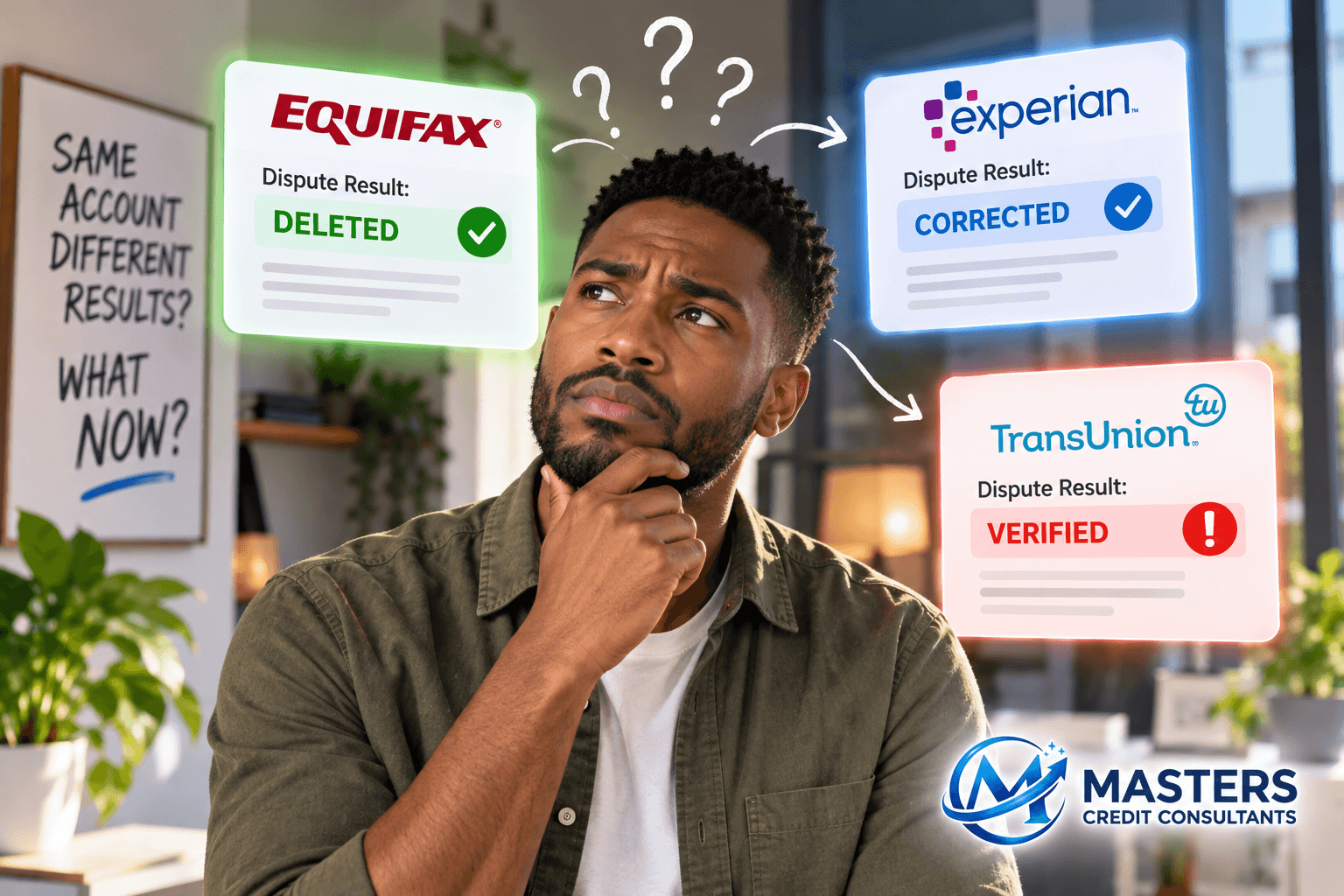
Imagine submitting your identification and explaining the mistake, only to receive a response saying the disputed information was verified.
That can be frustrating.
But an unsuccessful dispute does not automatically mean the information is accurate.
Under the Fair Credit Reporting Act (FCRA), consumers have rights to challenge inaccurate or incomplete credit reporting information.
If your dispute does not resolve the problem, consider the following actions.
Review what the bureau actually investigated
Was the disputed information verified, corrected, or left unchanged?
Did the response address the deceased status specifically?
Determine whether the investigation answered your original concern.
Contact the organization that supplied the information
If a creditor furnished the incorrect status, dispute the information directly with that creditor.
Ask it to investigate its own records and explain the result.
Provide new evidence where appropriate
If your initial dispute lacked important documentation, submit a more detailed explanation supported by relevant evidence.
For example, a subsequent SSA correction notice could materially change the information available for review.
Avoid repeatedly submitting identical disputes without addressing the reason the issue remains unresolved.
Escalate unresolved reporting problems
If the credit reporting company or furnisher fails to address an inaccurate deceased indicator, you may consider filing a complaint with the Consumer Financial Protection Bureau.
You may also consult a consumer protection attorney, particularly if the error has caused significant financial harm.
The right approach depends on the specific circumstances.
For readers experiencing inconsistent or unsatisfactory dispute outcomes, understanding how credit repair and credit-building services work may help clarify when professional support is worthwhile.
When professional guidance may help
If you’re dealing with repeated reporting errors, complicated documentation, or an unresolved dispute, schedule a credit consultation with Masters Credit Consultants.
A consultation can help you review the problem, organize the available information, and understand possible next steps.
You can dispute inaccurate information yourself for free, and hiring a credit repair company does not guarantee a particular outcome.
Can Being Reported Deceased Affect Your Business or Loan Application?
A deceased indicator can become particularly troublesome when you’re preparing for an important financial decision.
For entrepreneurs and small business owners, accurate personal credit information can be especially relevant.
Some business lenders review an owner’s personal credit when evaluating financing applications.
They may examine payment history, existing debt, credit utilization, and other aspects of financial responsibility.
Now imagine running a small business that needs financing to purchase equipment.
Your company has customers, revenue, and a clear expansion plan.
But during underwriting, the lender encounters a deceased indicator associated with your personal credit file.
The financing process may be delayed while your identity or credit information is reviewed.
That delay could affect inventory purchases, cash flow planning, or business expansion.
Three ways this error may interfere with business planning
- Business funding applications: Lenders reviewing personal credit may encounter inaccurate or inaccessible information.
- Credit-based financial products: Applications for credit cards, loans, and other financial products may require additional verification.
- Expansion decisions: Financing delays may disrupt purchasing plans or other time-sensitive business activities.
However, correcting the error does not guarantee financing approval.
Business lenders may also consider revenue, cash flow, business history, collateral, and other underwriting criteria.
If you are preparing for business funding, verify your personal credit information before submitting a major application.
Also organize your business financial records, confirm that your business structure is appropriate for your needs, and understand the lender’s eligibility requirements.
Credit accuracy is one part of financial readiness, not the entire business funding strategy.
How to Protect Your Credit After the Correction
Once the deceased notation has been removed, the next priority is maintaining accurate and healthy credit information.
You don’t want a corrected reporting error to become a recurring obstacle.
Here are several useful habits.
Monitor for new reporting problems
Continue reviewing your credit information periodically.
Pay particular attention to the account or identity details involved in the original deceased error.
If incorrect information reappears, keep your previous dispute results and correction notices available.
Keep your personal information consistent
Make sure lenders have your correct legal name, address, and other relevant identifying information.
Update outdated information when necessary.
Consistent records may help reduce confusion, although they cannot prevent every reporting mistake.
Focus on responsible credit habits
After the error is resolved, concentrate on the financial activities you can control.
These include:
- Paying obligations on time.
- Managing revolving credit utilization.
- Avoiding unnecessary new credit applications.
- Reviewing account statements for mistakes.
- Maintaining manageable debt obligations.
Consider credit-building tools separately from credit repair
If you’re working to establish or rebuild a positive credit history, Kikoff credit-building products may be worth evaluating.
Kikoff offers products intended to help eligible consumers build credit through qualifying reported account activity.
Before enrolling, review the product’s costs, reporting practices, eligibility conditions, and current terms.
Importantly, Kikoff does not correct an incorrect deceased indicator on your credit report.
That reporting problem must be addressed through the appropriate dispute and correction process.
Credit repair and credit building are not the same thing.
Credit repair involves investigating and addressing inaccurate or otherwise disputable information.
Credit building involves developing a history of responsible credit activity.
Understanding that difference helps you choose the right financial strategy at the right time.
Frequently Asked Questions
Can I still use my credit cards if my credit report says I’m deceased?
Possibly. A deceased indicator on your credit report does not automatically close every credit card you own. However, the creditor may separately restrict an account if its records incorrectly identify you as deceased. Contact the affected issuer to confirm your account status and request a correction if necessary.
Can being mistakenly reported deceased lower my credit score?
A deceased indicator is not necessarily a separate scoring factor that directly subtracts points from your credit score. However, it may interfere with credit reporting, identity verification, or the availability of a usable score. Any inaccurate account information associated with the error should be investigated and corrected.
Can I sue a credit bureau for reporting me as deceased?
Potentially, depending on the circumstances and whether the company violated applicable consumer reporting laws. A mistake alone does not automatically establish liability. Preserve your dispute records, supporting documents, and evidence of financial harm. A qualified consumer protection attorney can assess whether you have a legal claim.
Your Financial Story Isn’t Over
Seeing the word “deceased” on your credit report when you’re very much alive can be shocking.
But the mistake doesn’t have to define your financial future.
The most effective approach is to identify where the deceased indicator originated, gather the right evidence, dispute inaccurate information, and confirm that your credit records have been corrected.
Whether you’re preparing to buy a home, apply for a loan, launch a startup, or expand an existing business, accurate credit information is an important foundation.
At Masters Credit Consultants, we believe that better financial opportunities begin with reliable information, practical education, and a personalized strategy.
As a credit repair company, Masters Credit helps consumers and entrepreneurs address credit reporting concerns, understand their credit needs, and develop responsible credit improvement plans.
We recognize that many clients have goals beyond correcting a credit report.
They may be planning to start a business, improve their business strategy, choose an appropriate business structure, or prepare for future growth opportunities.
Strong personal credit management can support those plans, alongside sound business decisions and guidance from qualified legal, tax, or business professionals where needed.
If your goal is to improve your credit score fast, begin by identifying inaccuracies and understanding which factors affect your credit profile. No legitimate company can guarantee a rapid score increase, but correcting errors and maintaining positive financial habits can support progress over time.
Your credit report should reflect your actual financial history—not an administrative mistake that says your story has ended.
🚀 Schedule Your Free Credit Consultation with Masters Credit Consultants
If you are trying to remove a repossession from your credit report in 2026, professional guidance may help you identify reporting errors and create a personalized recovery strategy.
📞 Phone: 1-844-620-8796
🌐 Website: Masters Credit Consultants
📅 Schedule Your Free Consultation:
Additional Helpful Links
- Can You Buy a House With Collections on Your Credit Report?
- How Long Does Credit Repair Take? What to Realistically Expect in 2026
- Can Credit Repair Really Remove Collections From Your Credit Report in 2026?
- Tired of Credit Denials? How Credit Repair Services Can Help You Review What Lenders See
Related Questions
- Why does my credit report incorrectly show that I am deceased?
- How do I dispute a deceased status on my credit report with Equifax, Experian, and TransUnion?
- What documents do I need to prove I am alive and correct my credit report?
- Can being mistakenly reported as deceased affect my credit score, loans, or credit card applications?
- How long does it take to remove an incorrect deceased status from my credit report?
- What should I do if the credit bureaus refuse to correct my deceased status after a dispute?


Leave A Comment