


How Long Does Credit Repair Take? What to Realistically Expect in 2026
Thirty days? Three months? Six months?
If you’re thinking about hiring a credit repair company, one of your first questions is probably how long it will take to see results.
Maybe you’re hoping to qualify for a mortgage before your lease ends. Perhaps you want to finance a car, apply for a better credit card, or finally address the negative accounts that have been weighing down your credit profile.
Whatever your reason, waiting indefinitely isn’t an appealing option.
Here’s what you should know: Credit repair doesn’t operate on a guaranteed timeline.
Some credit reporting errors may be resolved after a single investigation. Others require additional documentation, follow-up disputes, or more time. And certain accurate negative items may remain on your credit report until their legally permitted reporting periods expire.
The process depends on what’s being reported, whether the information is inaccurate, and how the credit bureaus and information furnishers respond.
At Masters Credit Consultants, we believe consumers should understand these realities before beginning the credit repair process.
Let’s walk through what a realistic timeline can look like—and what you can do while waiting.

The Short Answer: How Long Does Credit Repair Take?
A credit reporting dispute generally takes around 30 days to investigate, although federal law allows additional time in certain circumstances.
But completing one dispute investigation isn’t the same as completing your entire credit repair journey.
A consumer with one straightforward reporting error may see a correction relatively quickly. Someone dealing with multiple accounts, conflicting records, or unresolved disputes may need several months or longer.
There is no legally established three-month or six-month timeline for completing credit repair.
The following timeline illustrates how a credit repair process might unfold.
Your Credit Repair Timeline: What Happens and When?
| Stage | Illustrative timeline | What happens |
| Initial review | Days 1–7 | Gather reports and identify potential errors |
| Dispute preparation | Weeks 1–2 | Organize evidence and prepare disputes |
| Investigation | Approximately 30 days after receipt | Credit bureaus investigate disputed information |
| Results review | Weeks 5–8 | Review responses and updated reporting |
| Follow-up | Months 2–3 or longer | Address unresolved issues or submit new evidence |
| Long-term improvement | Ongoing | Maintain positive payment habits and monitor progress |
These are illustrative planning periods, not guaranteed service milestones. Dispute investigations may take longer under applicable law, and the process may require fewer or more steps depending on the circumstances.
The First Week: Understanding What’s Actually on Your Credit Report
Before anyone can estimate how long your credit repair process might take, they need to understand the information being reported.
This is where expectations often change.
You may believe that five negative accounts need to be removed. But after reviewing your credit information, you might discover that only two contain identifiable errors.
The other three may be accurately reported.
That distinction determines what actions are appropriate.
A proper review should consider account ownership, balances, payment history, delinquency dates, collection information, and other details that may be inaccurate or incomplete.
Why All Three Credit Reports Matter
Experian, Equifax, and TransUnion may contain different information because not every creditor reports to every bureau.
An error appearing on one report may not appear on the others.
Masters Credit Consultants recommends obtaining a copy of your 3-bureau credit report through IdentityIQ’s $1 7-Day Trial, which provides access to your credit reports, scores, monitoring alerts, and identity theft protection.
Under eligible plans, Experian, Equifax, and TransUnion reports and scores can be refreshed every 30 days.
Access Your 3-Bureau Credit Reports Through IdentityIQ
Check the current trial pricing, automatic renewal terms, and cancellation requirements before enrolling.
You can also obtain free credit reports through AnnualCreditReport.com.
he First 30 Days: What Happens After a Dispute Is Submitted?
Let’s say you discover that a credit card payment was reported 60 days late, even though your bank records show that you paid on time.
You gather the evidence and submit a dispute.
What happens next?
Under the Fair Credit Reporting Act (FCRA), credit reporting agencies generally have 30 days after receiving a dispute to complete their investigation.
In certain circumstances, the investigation period may be extended by up to 15 additional days.
During the investigation, the credit bureau may contact the company that supplied the disputed information.
The furnisher may review account records and respond to the bureau.
The credit bureau must then determine how to handle the disputed information based on the investigation.
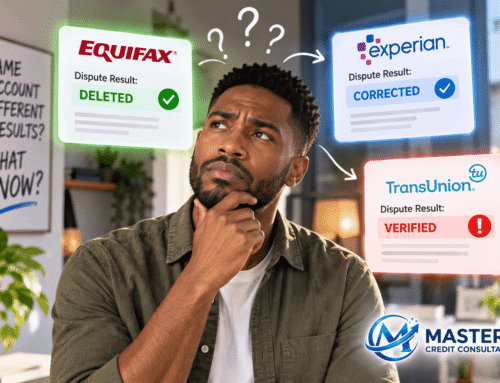
Possible outcomes include:
- Corrected: The reported information is updated to reflect accurate details.
- Deleted: The disputed information is removed when required by law.
- Verified: The investigation concludes that the information should remain as reported.
A verified result does not necessarily mean you have no further options, particularly if you have additional evidence supporting an error.
However, repeating the same dispute without new information is not a reliable way to obtain a different outcome.
What If the Credit Bureau Doesn’t Respond?
If the investigation period has passed and you have not received the required results, review your submission records and contact the credit bureau.
You may also consider filing a complaint with the Consumer Financial Protection Bureau when appropriate.
The important point is that the investigation timeline begins when the credit reporting agency receives the dispute—not necessarily when you first start gathering documents.
Month Two: When Results Begin to Take Shape
By this point, some consumers may have received their first investigation results.
But what does progress actually look like?
Consider two hypothetical situations.
Case A: One Incorrect Late Payment
A consumer identifies a late payment that was reported incorrectly. The creditor’s records confirm the error, and the credit bureau corrects the account following its investigation.
The reporting issue may be resolved after one dispute cycle.
Case B: Several Collection Accounts
Another consumer has four collection accounts involving different creditors.
One account contains an incorrect balance. Another belongs to someone else. Two are accurate and still within the permitted reporting period.
The inaccurate accounts may require disputes, while the accurate accounts generally cannot be removed merely because they’re negative.
The consumer may need more time to gather records and resolve the reporting issues.
Both consumers began reviewing their credit at approximately the same time.
Their outcomes—and the amount of work involved—are different.
That’s why an individualized review is more useful than a blanket promise of results within a fixed number of days.
Months Three Through Six: Why Some Credit Repair Cases Take Longer
You may have seen advertisements promising dramatic credit improvements in 90 days.
But three months isn’t a universal deadline, and six months isn’t a guaranteed completion period.
Some reporting issues take longer because the initial investigation does not resolve the consumer’s concern.
For example, additional records may become available, a creditor may need to correct information across multiple bureaus, or a dispute may require further investigation.
Sometimes, the original information is accurate and no deletion is warranted.
In that situation, continuing to dispute the same account without a legitimate basis is unlikely to be productive.
A responsible credit repair process should focus on valid reporting concerns rather than generating disputes simply to make it appear that progress is occurring.
Does a Longer Process Mean Better Results?
Not necessarily.
More disputes, more letters, or more months of service do not automatically translate into better credit outcomes.
What matters is whether the information being challenged is genuinely inaccurate or otherwise subject to correction under applicable law.
Consumers should be cautious of companies that charge ongoing fees without clearly explaining the work being performed or the results of previous disputes.
What Can Make Credit Repair Take Longer?
Several factors can influence the overall timeline.
The number of accounts involved. Reviewing one potentially inaccurate late payment is different from examining multiple collections, charge-offs, and account histories.
The availability of documentation. Payment receipts, creditor correspondence, and account statements may help support disputes.
The nature of the reporting error. A straightforward balance error may be easier to investigate than an identity theft issue involving multiple accounts.
The response from credit bureaus and furnishers. Some disputes are resolved in one investigation, while others may require additional follow-up.
The presence of accurate negative information. Accurate late payments, collections, and other negative items generally cannot be removed merely through credit repair.
Your current financial habits. New missed payments or rising credit card balances may undermine progress even when older reporting errors are corrected.
The last factor is particularly important.
Credit repair and credit improvement are related, but they aren’t identical.
When Will Your Credit Score Actually Improve?
This is where the timeline becomes less predictable.
Correcting a credit reporting error and seeing a change in your credit score are two different events.
Credit scores are calculated using information available in your credit file at the time the score is generated.
If an inaccurate negative item is corrected, your score may change when updated information is available and a new score is calculated.
But the amount of improvement depends on the rest of your credit profile.
For example, removing one incorrect late payment may have a different effect on someone with an otherwise strong credit history than on someone with multiple remaining delinquencies.
Some corrections may produce little or no score change.
And there is no legitimate way to guarantee a specific increase in points.
A Credit Score Isn’t Updated Just Once a Month
Credit bureaus update account information as they receive reporting from creditors and other furnishers.
Different creditors may report on different schedules.
A monitoring service may also have its own schedule for refreshing displayed credit information.
That means you shouldn’t assume your credit score will automatically change exactly 30 days after a dispute is resolved.
The timing depends on when corrected information becomes available and when a new score is generated.
What If You Need Better Credit Before a Major Purchase?
A credit repair timeline becomes especially important when you’re working toward a deadline.
Perhaps you’re hoping to buy a house in four months or replace your car before the end of the year.
The key is to distinguish between problems that may be corrected through disputes and financial factors that require a longer-term strategy.
For example, if your credit report contains an incorrect delinquency, disputing the error may be appropriate.
But if your credit card balances are high, reducing those balances may be more relevant than filing disputes.
If you are preparing for a mortgage, speak with your lender before making major changes to accounts or starting disputes. Mortgage underwriting requirements and credit scoring models may differ from those used for other loans.
Should You Wait Until You’re Denied Credit?
Not necessarily.
Reviewing your credit information before applying for financing gives you more time to identify potential errors and understand your current financial position.
It can also help you avoid discovering a reporting problem at the last minute.
The earlier you understand your credit profile, the more time you have to address issues responsibly.
What Should You Be Doing While Credit Repair Is Underway?
You don’t need to sit and wait for credit bureau responses before making positive financial changes.
Even when a dispute is pending, your everyday financial decisions continue to matter.
Consider the following habits:
Keep current accounts current. Paying bills on time helps prevent new delinquencies from appearing.
Manage credit card balances. Lower revolving credit utilization may support your credit profile, depending on the scoring model and other factors.
Avoid unnecessary credit applications. Opening multiple new accounts in a short period may affect your credit.
Maintain organized financial records. Save payment confirmations, account statements, and correspondence related to disputes.
Monitor changes without obsessing over daily score movements. Credit sco
res can fluctuate for reasons unrelated to a specific dispute.
Can Kikoff Help During This Period?
Some consumers explore credit-building products while working to improve their overall credit profile.
Kikoff offers credit-building tools that may help eligible consumers establish positive payment history.
Depending on the product, available features may include credit-building accounts and payment reporting services.
Kikoff does not remove accurately reported negative information or guarantee a faster credit repair process.
However, responsible use of an appropriate credit-building product may support longer-term credit goals.
Explore Kikoff Credit-Building Options
Review the current product terms, fees, eligibility requirements, and credit reporting details before enrolling.
How Do You Know Whether Credit Repair Is Working?
Instead of judging success only by the number of points your credit score increases, consider whether actual reporting problems are being resolved.
For example:
- Has an inaccurate account balance been corrected?
- Has an account that doesn’t belong to you been removed?
- Have incorrect delinquency dates been updated?
- Have the credit bureaus provided investigation results?
- Are unresolved reporting concerns being addressed with appropriate documentation?
These are more meaningful measures of dispute progress than vague promises about rapid score increases.
You should also be able to understand what a credit repair company is doing on your behalf.
If you’re paying for professional assistance, ask for clear explanations of the services provided, the status of disputes, and any remaining issues.
Is Hiring a Credit Repair Company Faster Than Doing It Yourself?
Not automatically.
The FCRA establishes dispute investigation requirements that generally apply regardless of whether you submit a dispute yourself or obtain professional assistance.
Hiring a credit repair company does not create a special expedited investigation process.
Consumers have the right to dispute inaccurate credit reporting information themselves for free.
However, professional assistance may be useful when you’re dealing with several complicated accounts, have difficulty organizing documentation, or want guidance understanding your reports.
At Masters Credit Consultants, the value of professional support is helping consumers better understand their credit reporting concerns and the available steps for addressing them—not promising an unrealistic timeline.
Before hiring any credit repair company, make sure you understand its services, fees, cancellation rights, and limitations.
Three Credit Repair Promises You Should Question
If you’re researching credit repair services, be cautious when you encounter promises such as these.
“We Can Remove Every Negative Item in 30 Days”
Accurate negative information generally cannot be removed simply because it affects your credit.
A company cannot guarantee the deletion of all negative accounts.
“Your Credit Score Will Increase by 100 Points”
Credit score changes depend on individual circumstances and the scoring model used.
No legitimate company can promise a specific point increase for every consumer.
“We Have a Special Relationship With the Credit Bureaus”
Credit repair companies do not have a special legal right to bypass the credit reporting investigation process.
The same fundamental consumer protections apply whether you dispute information independently or seek professional assistance.
A trustworthy service should explain realistic possibilities rather than sell guaranteed outcomes.
Frequently Asked Questions
Can credit repair work in 30 days?
Some straightforward credit reporting errors may be resolved within a single investigation period. However, 30 days is not a guaranteed timeline for completing an entire credit repair process.
How long does it take to remove a collection?
An inaccurate collection may be corrected or deleted following an investigation. Accurate collections generally remain for the legally permitted reporting period unless another valid basis for removal exists.
Is three months enough time to repair credit?
Three months may be sufficient to resolve certain reporting errors, but more complicated issues can take longer. No fixed timeline applies to every consumer.
How long does credit repair take when buying a house?
It depends on the reporting issues involved, your overall credit profile, and your lender’s requirements. Speak with your mortgage lender before relying on a particular credit repair timeline.
Can a credit repair company guarantee results?
No legitimate credit repair company can guarantee the removal of accurate negative information or a specific credit score increase.
Will my credit score improve immediately after a dispute?
Not necessarily. Score changes depend on the information in your credit file, when updates are processed, and the scoring model used.
How often should I review my credit reports during credit repair?
Review your reports when investigation results are available or when updated information is expected. Monitoring tools can help you identify changes, but frequent checking does not make disputes resolve faster.
What happens if my dispute comes back verified?
Review the investigation response and determine whether you have additional evidence of an error. You may have further options, but repeatedly disputing accurate information without new grounds is unlikely to help.
Your Credit Repair Timeline Starts With Understanding Your Credit
The biggest mistake consumers make isn’t necessarily starting credit repair too late.
It’s starting without knowing what needs to be corrected.
You may have one reporting error that can be resolved relatively quickly. Or you may have multiple accounts that require further investigation and a longer-term financial strategy.
Until your credit information has been reviewed, no one can responsibly promise exactly how long your situation will take.
At Masters Credit Consultants, we believe the process should begin with clarity, realistic expectations, and a plan based on your actual credit profile.
If you’ve been putting off reviewing your credit because you’re unsure where to begin, a consultation can help you better understand your options.
Don’t Guess How Long Credit Repair Might Take. Start With a Credit Review.
Find out what information may be affecting your credit and explore the next steps available for your situation.
SCHEDULE YOUR FREE CREDIT CONSULTATION
Masters Credit Consultants — A clearer understanding of your credit starts here.
🚀 Schedule Your Free Credit Consultation with Masters Credit Consultants
Schedule a free consultation with Masters Credit Consultants and discover how a personalized credit improvement strategy can help you achieve your financial goals.
Whether you’re preparing to buy a home, qualify for better financing, rebuild after financial hardship, or strengthen your business opportunities, taking action today could open the door to greater possibilities tomorrow.
📞 Phone: 1-844-620-8796
🌐 Website: https://www.masterscredit.com
📅 Schedule Your Free Consultation:
https://www.masterscredit.com/sign-up/
Additional Helpful Links
- Check Your Credit Before Buying a Home: What to Look for First
- What Does a Credit Repair Specialist Do? What to Know Before You Sign Up
- Can Bad Credit Make It Harder to Rent an Apartment? What to Check Before You Apply
- Tired of Credit Denials? How Credit Repair Services Can Help You Review What Lenders See
Related Questions
- How long does it typically take to see improvements in your credit score after starting credit repair?
- Can credit repair remove negative items from your credit report in 30 days?
- What factors can speed up or delay the credit repair process in 2026?
- How long does it take to dispute and remove inaccurate collections, late payments, or charge-offs?
- Does hiring a professional credit repair company make the credit repair process faster?
- How can you track your credit repair progress and know when your credit is improving?










Leave A Comment